In short
Classrooms and libraries use low-glare direct/indirect pendants for even, comfortable light, with daylight dimming and absence detection to save energy.
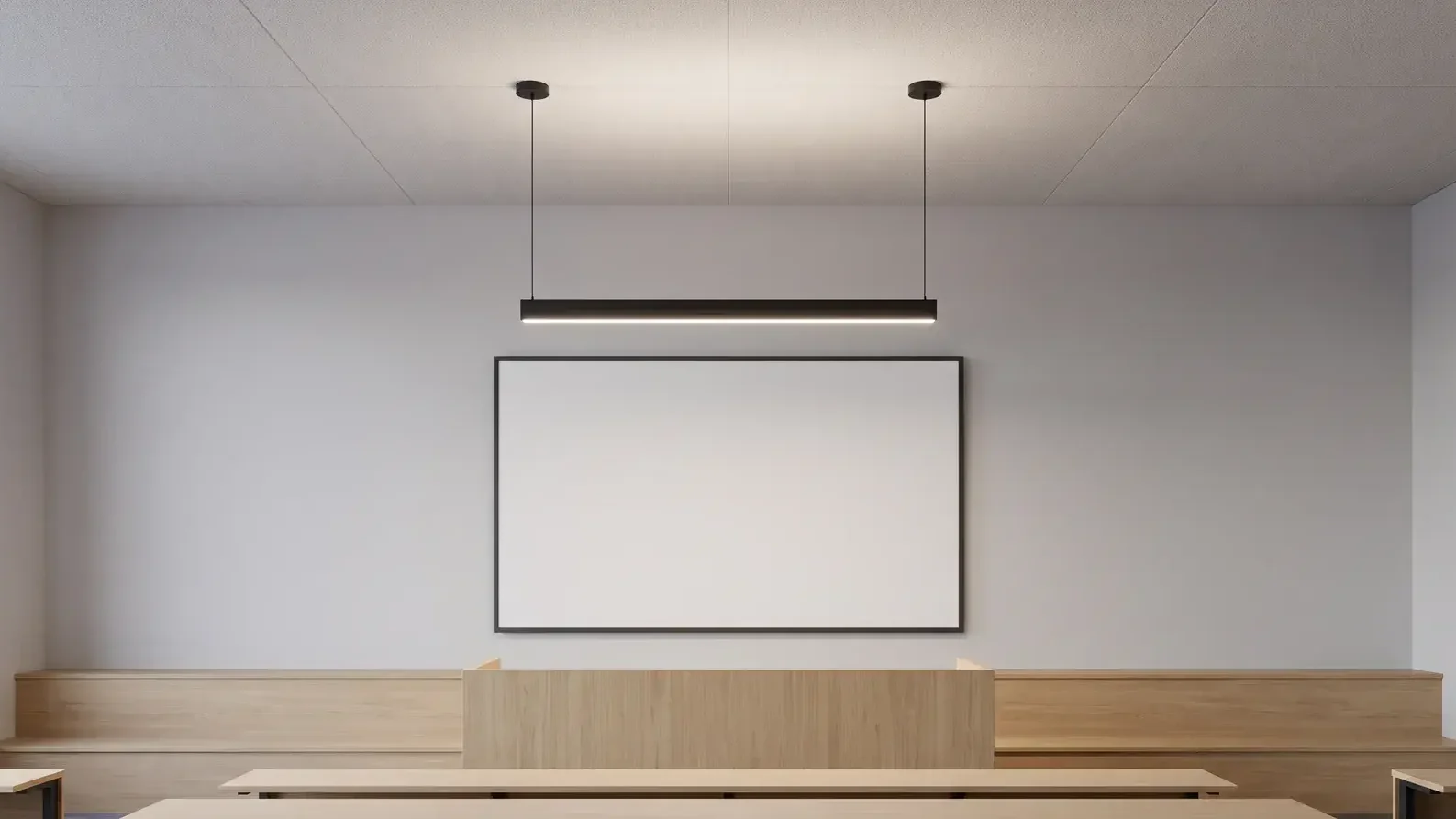
Education spaces need long hours of comfortable light for reading, writing and screen work.
Classrooms
Direct/indirect pendants brighten the ceiling, reduce contrast and keep glare low when students look up.
Libraries
Linear pendants over study tables give focused light, while uplight keeps the space airy.
Receptions and atria
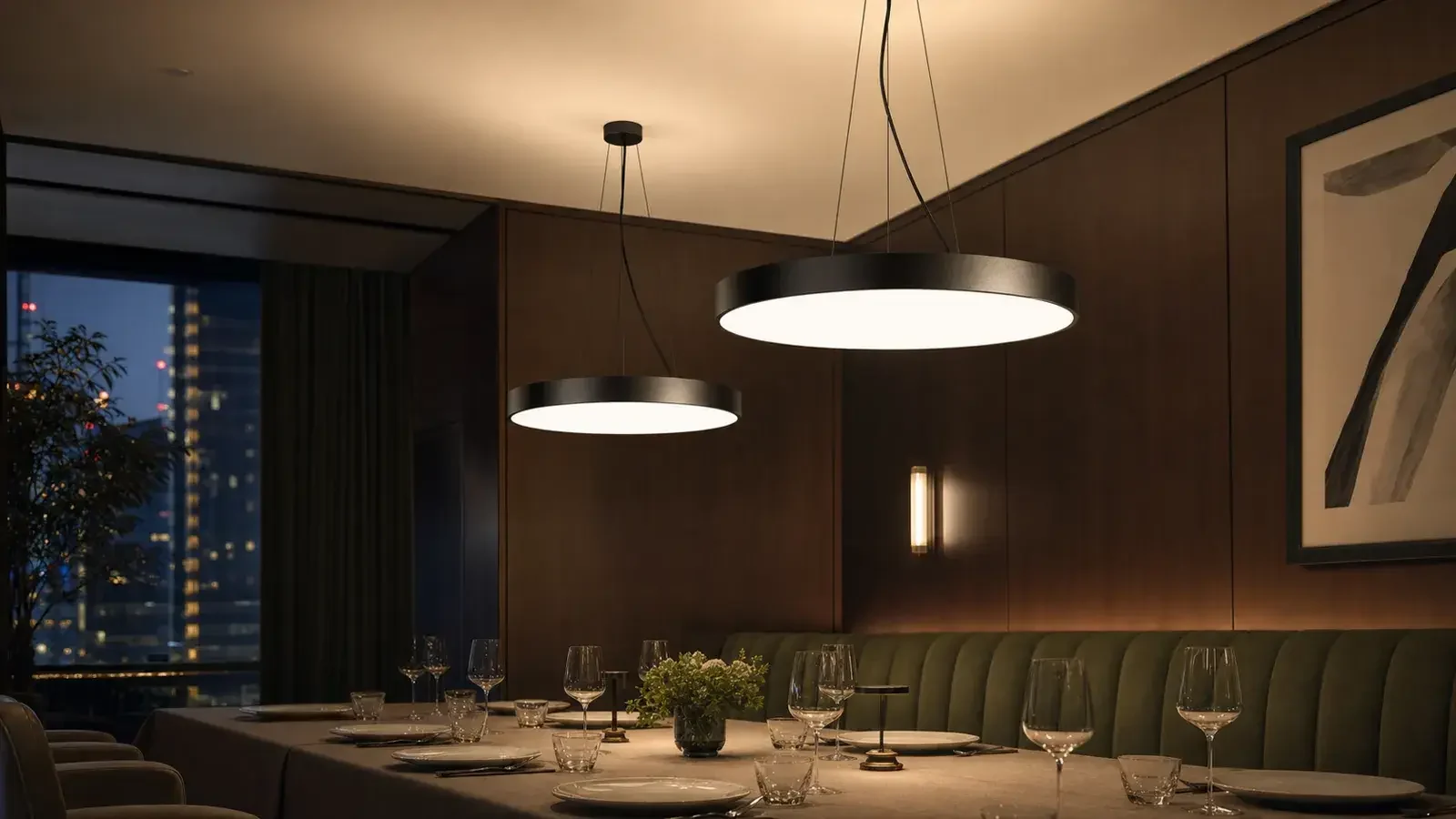
Feature pendants add identity to entrances and social spaces.
Controls
Daylight dimming near windows and absence detection in classrooms cut energy use.
Further reading at 299 Lighting
Next steps on suspendedlighting.com
Planning a suspended scheme?
Send us your layout and ceiling heights. We'll come back with a shortlist, suspension details and LG7 calculations.
Start a project →Frequently asked questions
Is suspended lighting good for classrooms?
Yes. Low-glare direct/indirect pendants give even, comfortable light.
What controls suit classrooms?
Daylight dimming and absence detection, often with a presentation scene.