In short
The Elephant Exchange food hall opens on 12 November. How to plan pendant lighting for food halls, central bars and shared seating.
The Elephant Exchange Food Hall opens in the new Elephant and Castle Town Centre on 12 November 2026 (Elephant and Castle). It is the latest opening from hospitality group Blend Family (Breaking Travel News), with 14 independent kitchens (The Upcoming), a central bar, a coffee bar and Lulu, a self-pour wine concept "taking centre stage at the heart of the venue" (The Staff Canteen).
None of these reports describe the hall's lighting, so this guide is not about that venue. It looks at the general challenge food halls present: a large shared space that has to work as a market, a restaurant, a bar and sometimes an events venue, from morning to late evening. Pendants usually do most of that work.
Why food halls are different
A food hall combines several kinds of space under one roof:
- Trader kitchens and counters, each with its own branding
- Shared seating, often long tables and benches
- Central bars that act as a focal point
- Circulation routes that need to be clear and safe
- Event space for talks, music and community use
The lighting has to tie these together while letting each part have its own character.
A layered approach
| Zone | Lighting role | Pendant approach |
|---|---|---|
| Shared seating | Warm, inviting light on tables | Rows or clusters of pendants at a consistent height |
| Central bar | Focal point and service light | Feature pendants or a statement run above the bar |
| Trader counters | Task light on food | Counter pendants plus downlights or track |
| Circulation | Wayfinding | Higher, even light |
| High volumes | Fill the space without glare | Larger or high-output pendants |
Pendants over shared tables
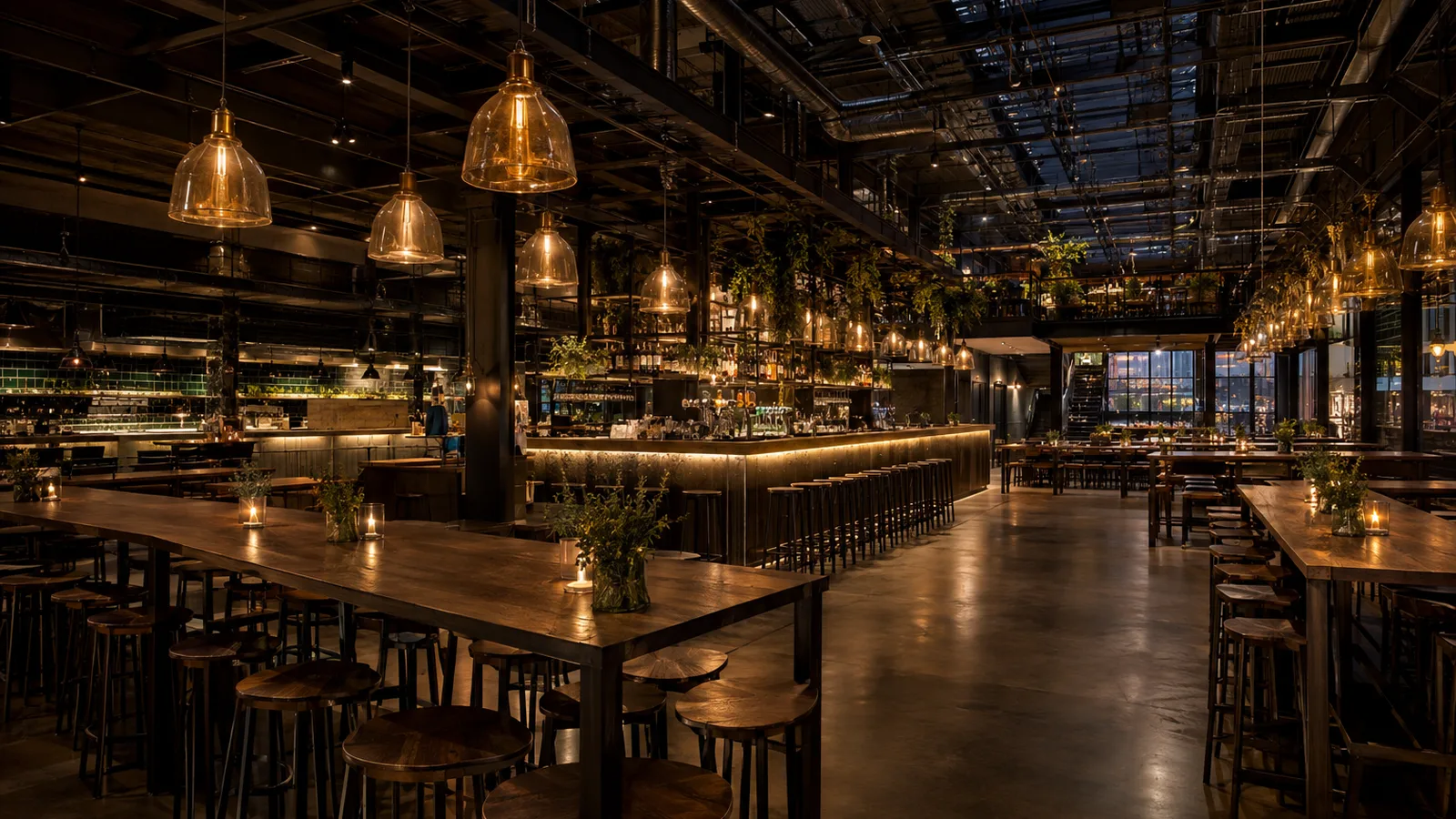
Long tables suit rows of pendants. Keep the drop height consistent along each table, so the room looks ordered, and low enough to create a sense of intimacy without blocking sightlines. See suspended lighting height and pendant spacing and layout.
The central bar
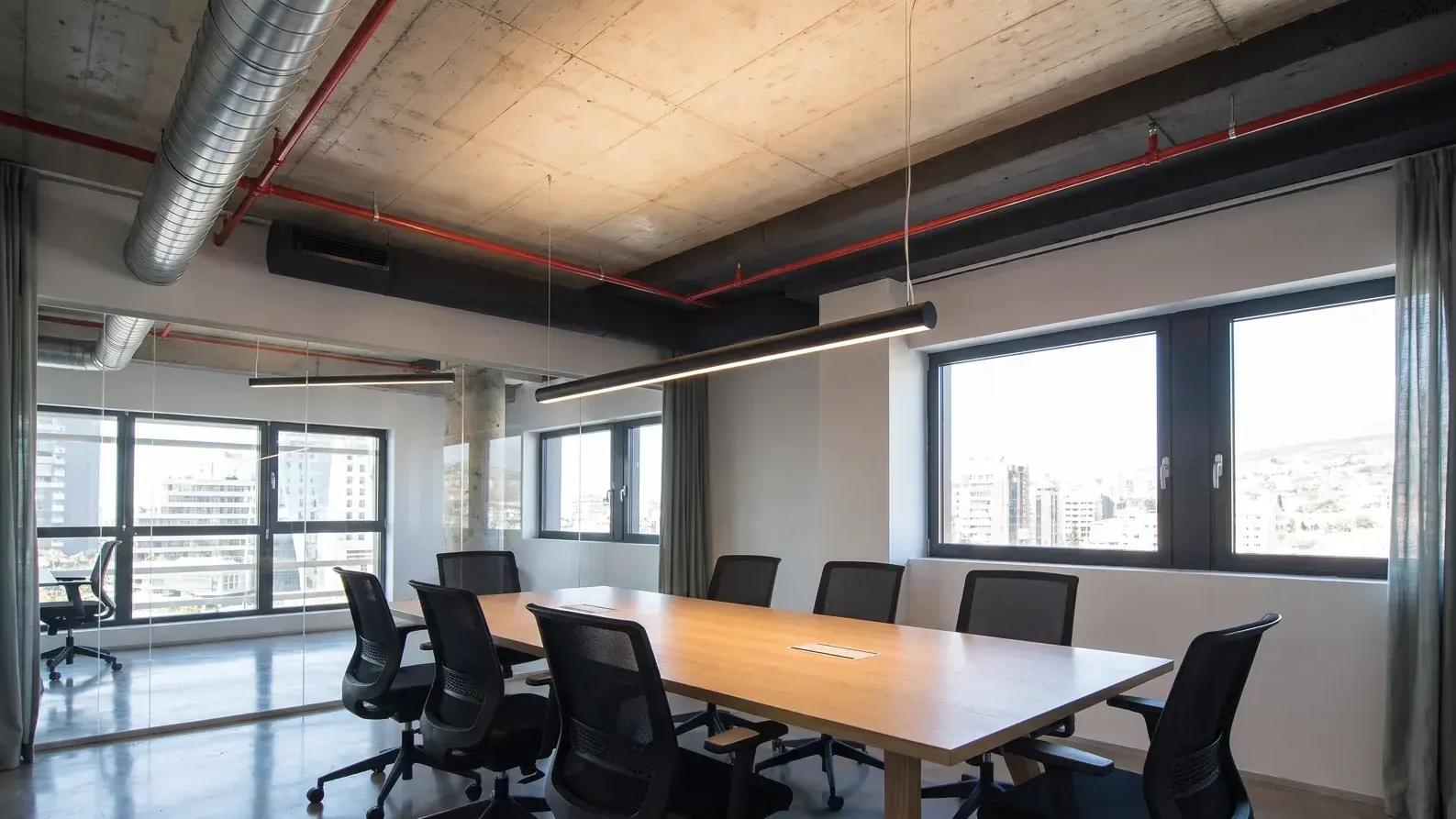
A central bar is the natural focal point of a food hall. Feature pendants or a continuous run above the counter mark it out from the surrounding seating. Bar staff also need good task light. See continuous suspended linear runs and sculptural pendants.
Trader counters
Each trader needs light on the food. Warm white with a high CRI makes food look its best. See CRI for pendant lighting and colour temperature. Keep colour temperature consistent across the hall, even if pendant styles change from trader to trader.
High and exposed ceilings
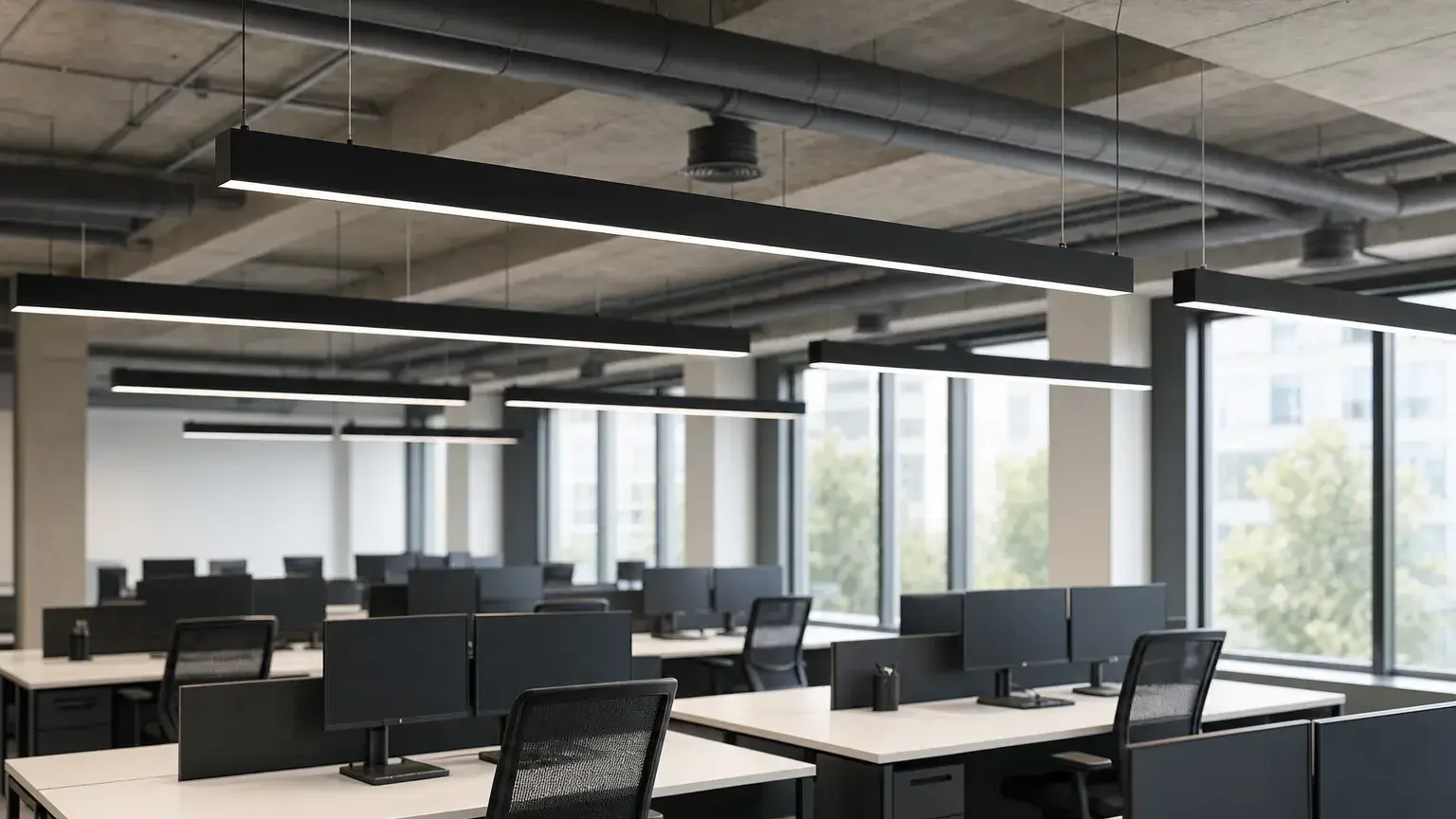
Many food halls are in large, open buildings with exposed services. Pendants bring the light down to people. See suspended lighting for exposed ceilings and high ceilings.
From breakfast to late night
Food halls often open from early morning to late at night. Lighting that works at 8am may feel harsh at 10pm. Plan for:
- Dimming on all decorative and ambient circuits
- Scenes for day, evening and events
- Daylight response near windows and rooflights
- Separate control for trader areas and shared areas
See controls for suspended lighting.
Practical points
- Cleaning. Grease and dust build up near kitchens. Choose pendants that are easy to clean
- Weight and fixing. Large pendants may need fixing to the structure. See suspension kits, cables and canopies
- Glare. Avoid exposed bright lamps in sightlines. See glare and UGR
- Emergency lighting. Plan escape routes from the start. See emergency lighting with pendants
- Sustainability. Replaceable drivers and modules extend life. See biophilic pendants for natural materials
Food halls in older buildings
Many food halls occupy former markets, warehouses or industrial buildings. Here, pendants can respect the structure while adding light where people need it. Our guide to suspended lighting in refurbishments covers fixings and cabling in existing buildings. For retrofit options for existing fittings, see relumen8.com on retrofit for co-working and hospitality.
Choosing pendant styles
Food halls often mix pendant styles to give each zone its own feel. That can work well, but a few rules keep the room coherent:
- Limit the palette. Two or three pendant families are usually enough for one hall
- Repeat a finish. A shared metal or colour links different styles. See black vs white pendants
- Match scale to space. Small pendants disappear in large volumes, while oversized fittings can overwhelm low areas
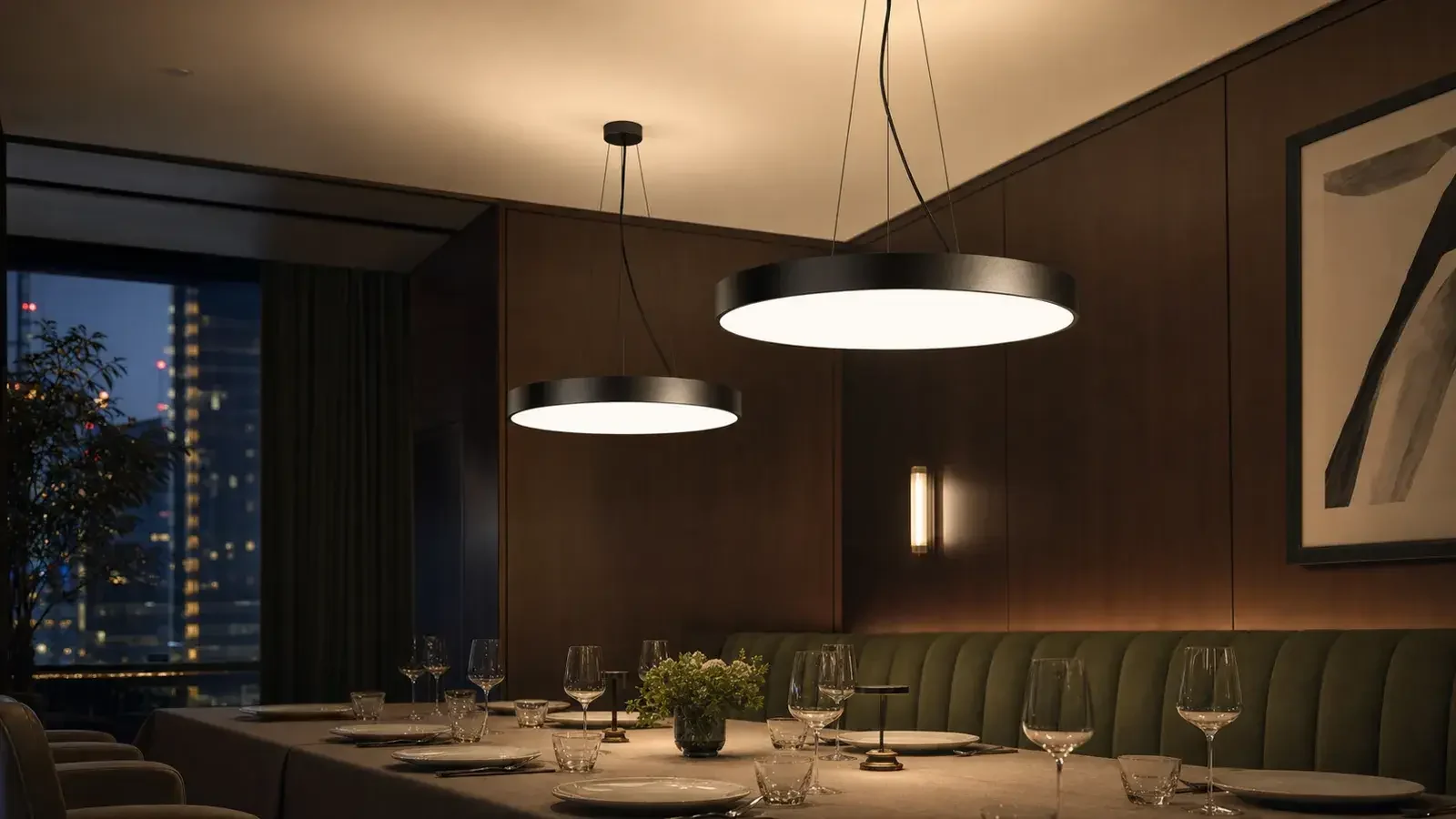
- Use shapes with purpose. Cylinder pendants give focused light over tables, while circular pendants suit large open areas
Budget
Food hall fit-outs often have tight budgets and programmes. Spend on the pieces people notice most, such as the central bar and main seating, and use simpler, efficient pendants elsewhere. Our guide to suspended lighting costs explains what drives price, and slim pendants can be a cost-effective option for repeated runs.
Done well, pendant lighting can help a food hall feel like one welcoming room rather than a collection of separate counters.
How 299 Lighting can help
299 Lighting supplies suspended lighting and feature lights for hospitality and retail spaces, including bespoke pendants. Our project support team can help with layouts, heights and controls. Send us your plans to start. For linear options, see linear-led.com on linear lighting for hospitality, and for downlights over counters, recessedlighting.co.uk on hospitality lighting.
Further reading at 299 Lighting
Next steps on suspendedlighting.com
Planning a suspended scheme?
Send us your layout and ceiling heights. We'll come back with a shortlist, suspension details and LG7 calculations.
Start a project →Frequently asked questions
When does The Elephant Exchange open?
The Elephant Exchange Food Hall opens in Elephant and Castle on 12 November 2026.
What lighting suits food hall seating?
Rows or clusters of dimmable pendants at a consistent height, using warm white light with a high CRI.
How should a central bar be lit?
Feature pendants or a continuous run above the counter mark it out as a focal point and give staff task light.
Do food halls need dimming?
Yes. Most open from morning to late evening, so dimming and scenes help the lighting suit each time of day.