In short
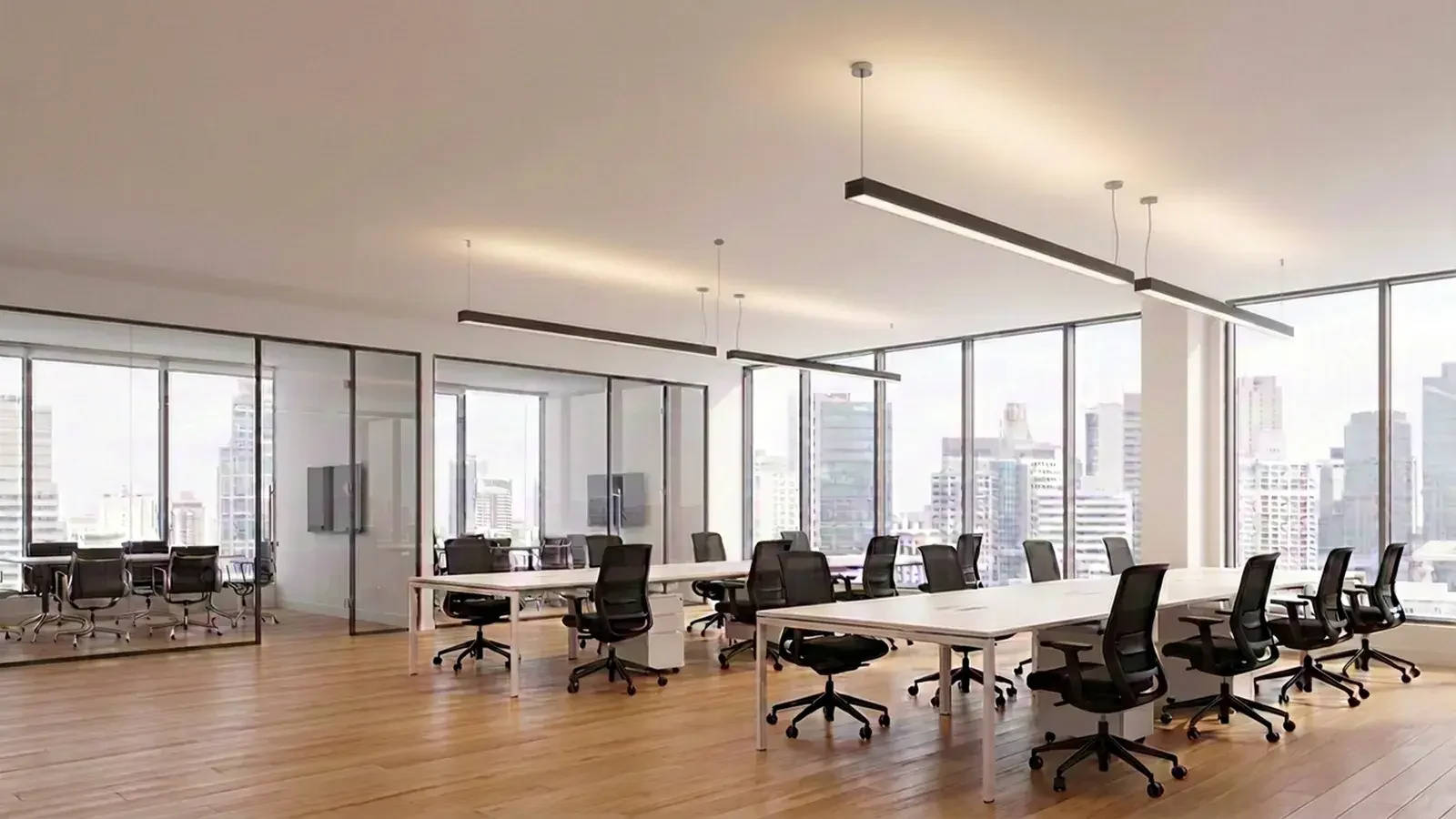
Suspended lighting hangs below the ceiling on cables or rods, and includes linear pendants, direct/indirect fittings, curved systems and feature pendants.
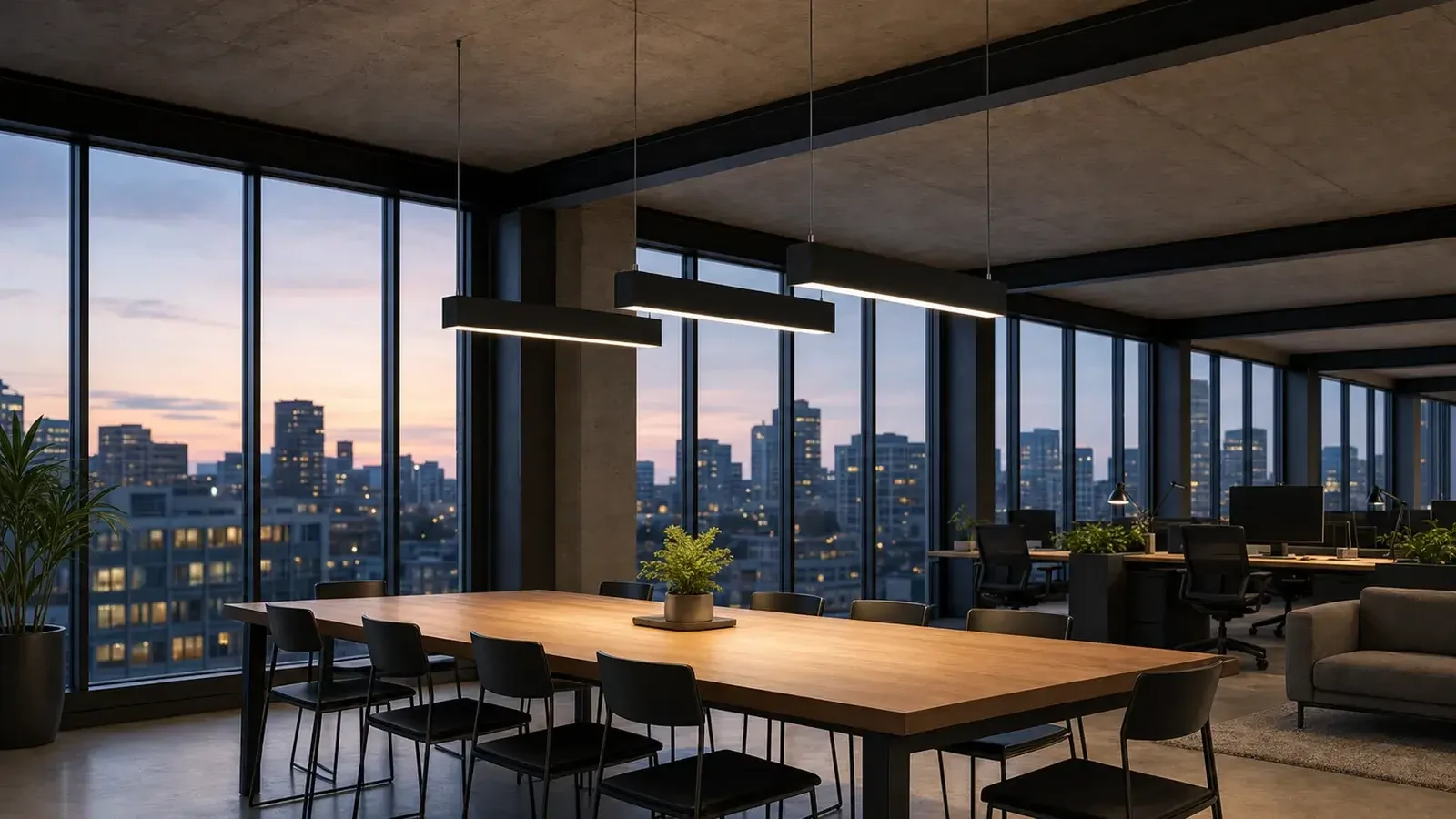
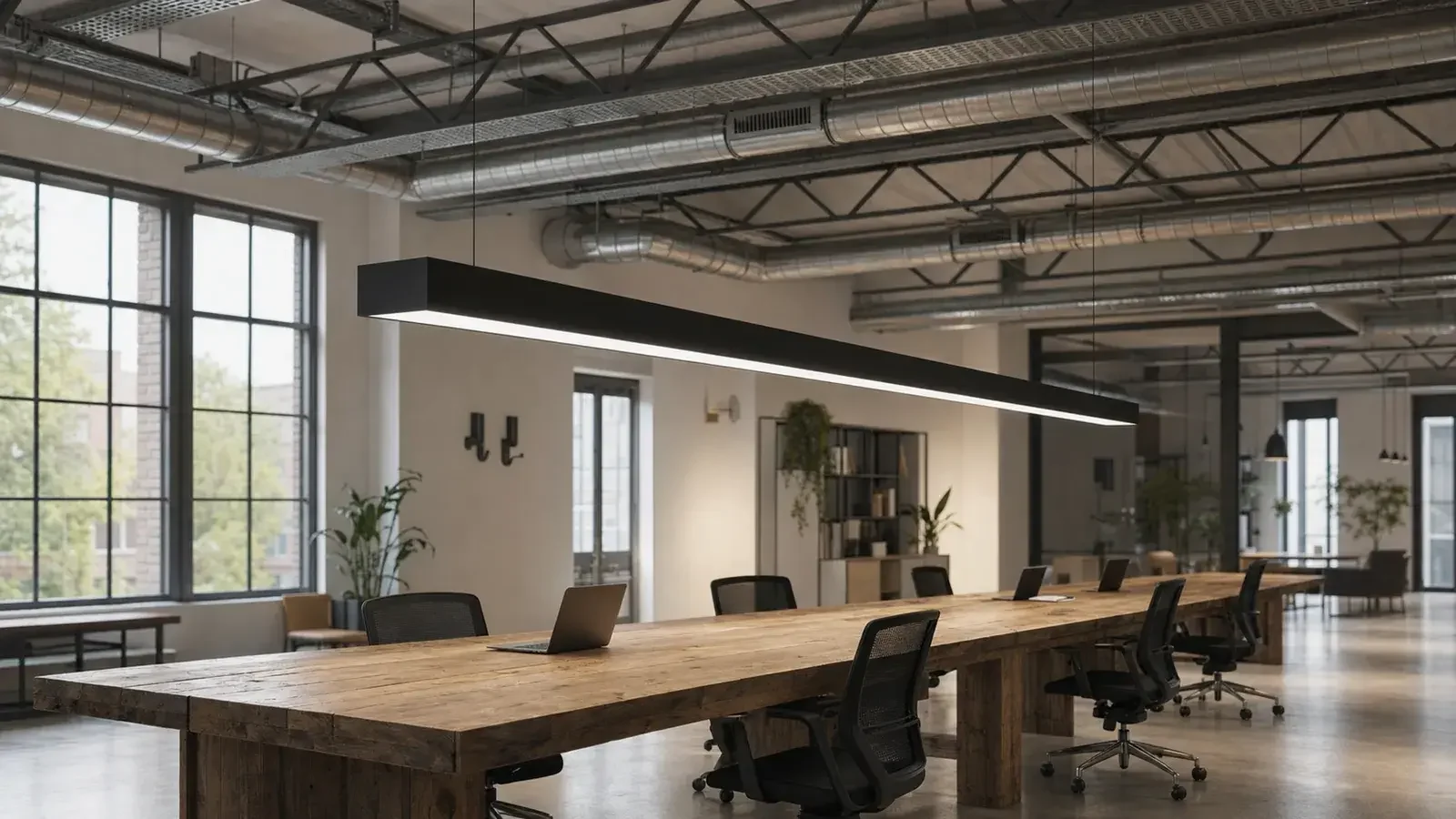
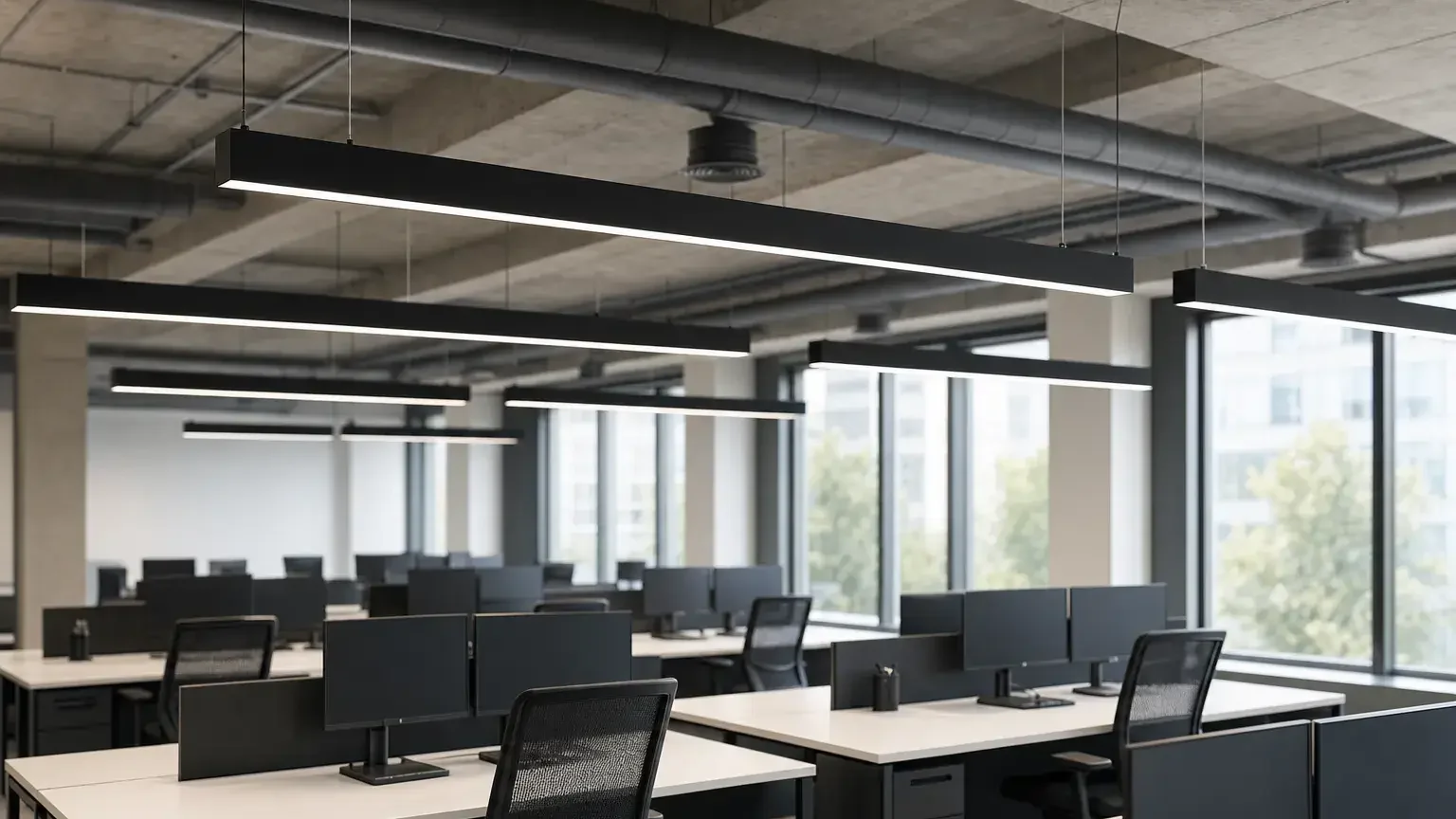
Suspended lighting, also called pendant lighting, hangs below the ceiling on cables, rods or stems. It brings light closer to the task and turns the luminaire into part of the interior design.
The main types
- Linear pendants: long, slim fittings for offices, meeting rooms and libraries
- Direct/indirect pendants: light down to the task and up to the ceiling
- Curved and sculptural systems: rings, ovals and custom shapes
- Cylinders and feature pendants: accent and statement fittings
Why designers choose suspended lighting
- Works with exposed soffits and high ceilings
- Defines zones such as desks, tables and bars
- Direct/indirect versions brighten ceilings and soften contrast
- A visible design element that adds character
When to choose something else
Low ceilings, rooms where a clean ceiling plane matters most, or spaces with tall vehicles or equipment may suit recessed or surface lighting better.
Further reading at 299 Lighting
Next steps on suspendedlighting.com
Planning a suspended scheme?
Send us your layout and ceiling heights. We'll come back with a shortlist, suspension details and LG7 calculations.
Start a project →Frequently asked questions
What is suspended lighting?
Suspended lighting hangs below the ceiling on cables or rods. It includes linear pendants, direct/indirect fittings, curved systems and feature pendants.
Is suspended lighting the same as pendant lighting?
Yes. The terms are used interchangeably for luminaires that hang below the ceiling.