In short
Direct pendants send all light downward for efficiency and drama, while direct/indirect pendants also light the ceiling for softer, more comfortable rooms that help meet LG7.
From below, two pendants can look identical and still create very different rooms.
Direct
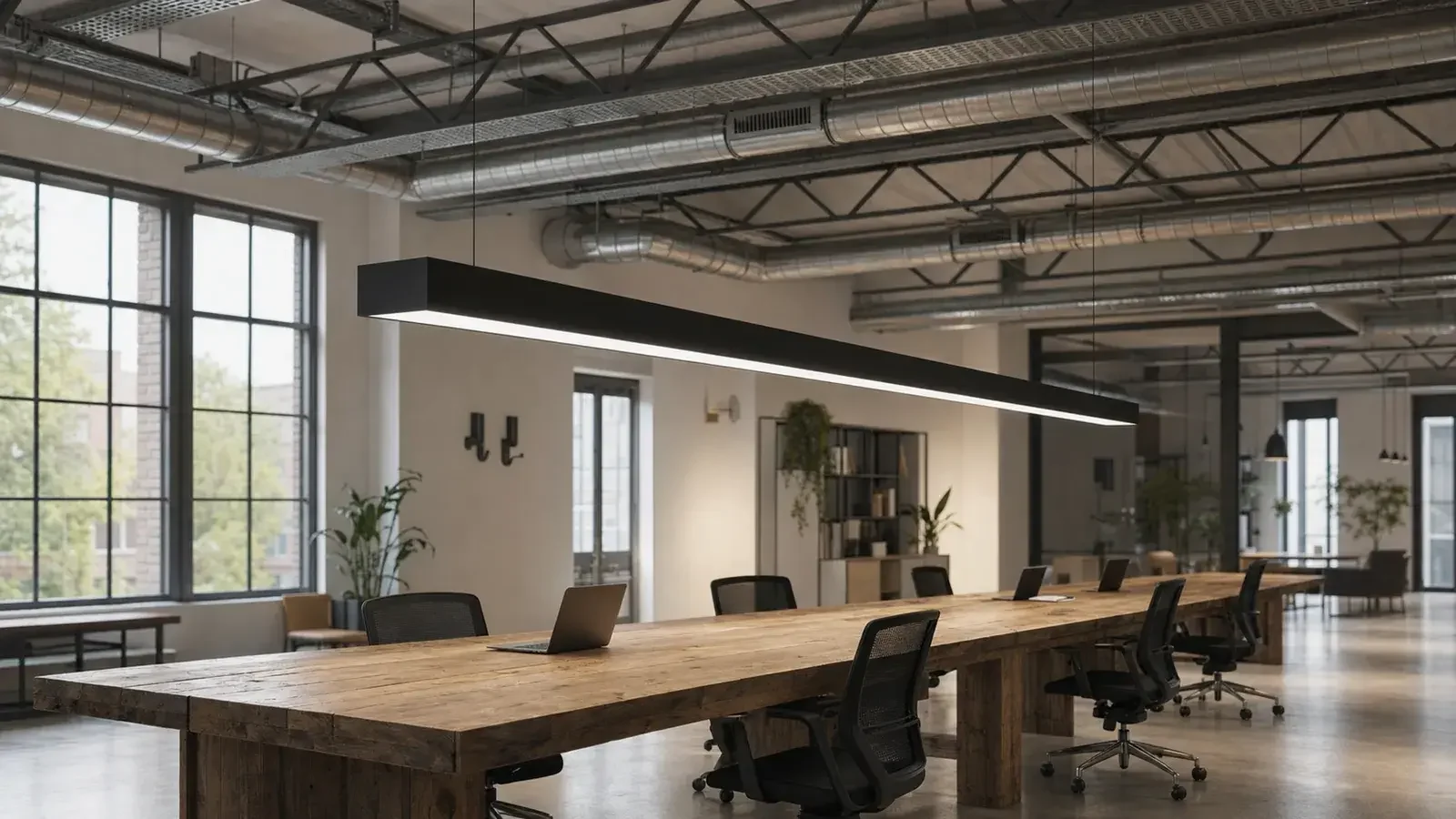
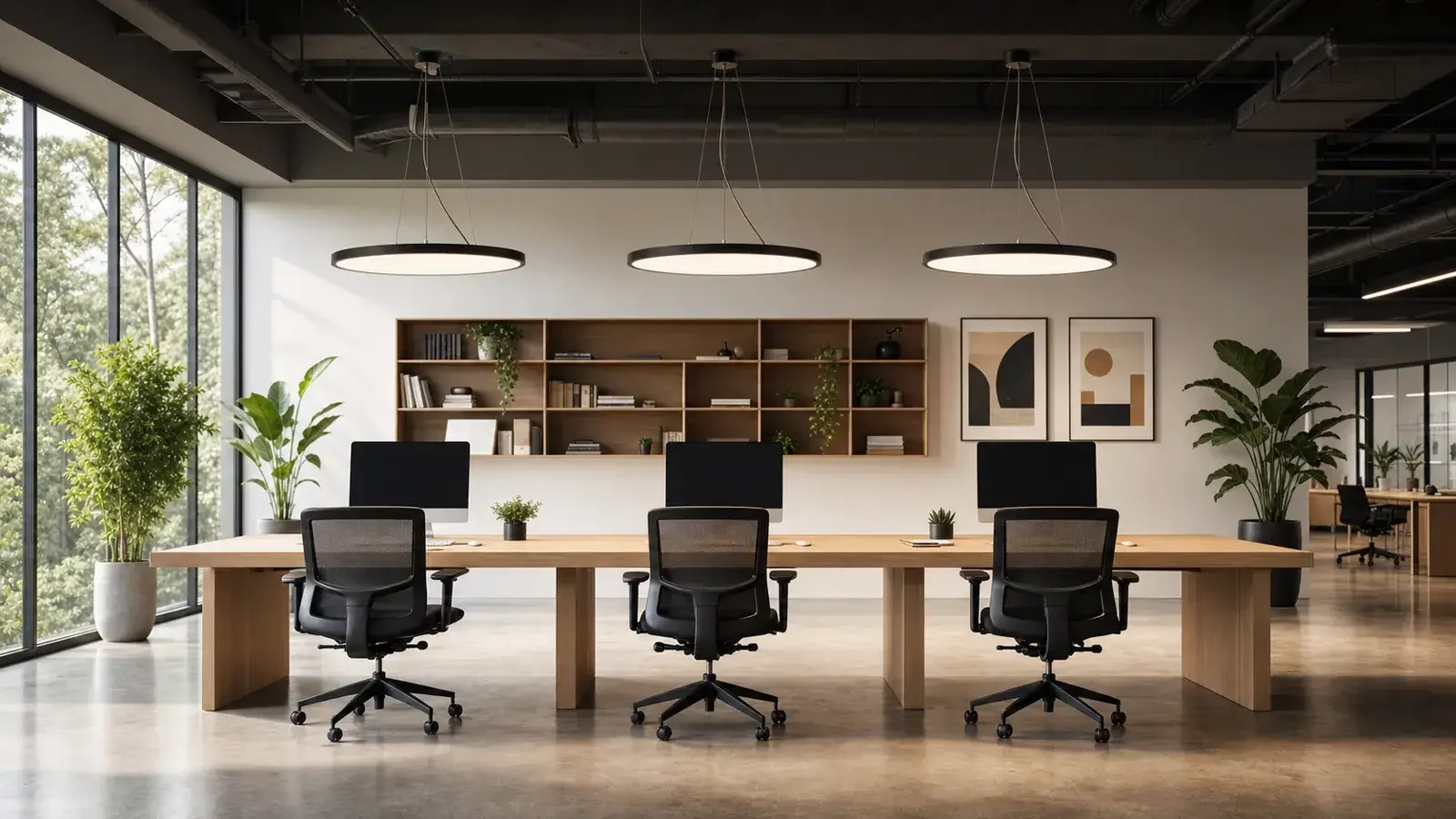
All the light goes down. Direct pendants are efficient and precise, ideal for retail, circulation and dark or very high ceilings where uplight would be wasted.
Direct/indirect
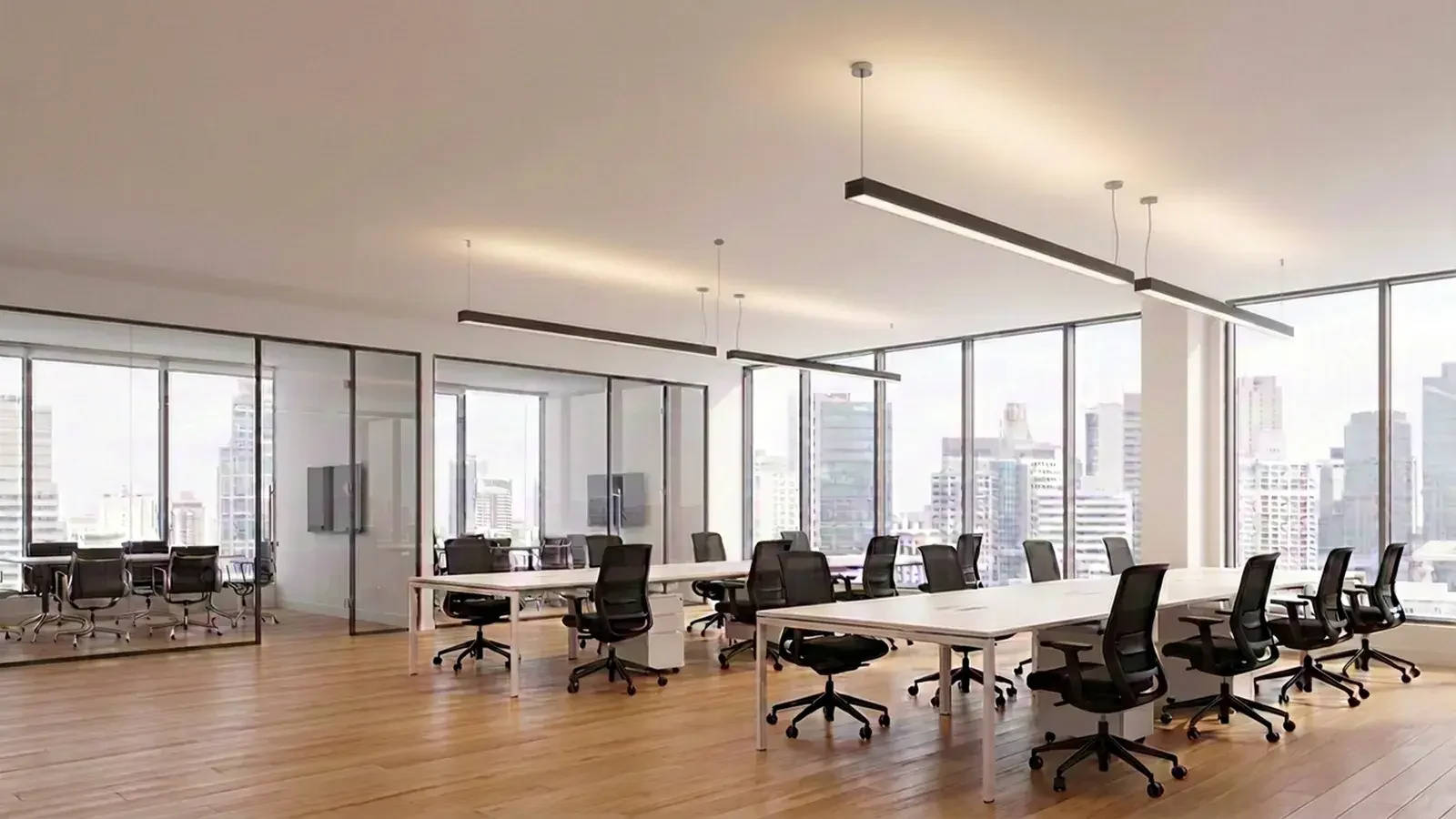
Part of the light goes up to the ceiling, which becomes a large, soft secondary source. Rooms feel brighter and calmer, with less contrast and glare.
| Direct | Direct / Indirect | |
|---|---|---|
| Feel | Focused, dramatic | Bright, open, calm |
| Ceiling | Stays dark | Gently lit |
| Best for | Retail, feature, circulation | Offices, classrooms, meeting rooms |
The LG7 connection
CIBSE LG7 encourages lit ceilings and walls in offices. Direct/indirect pendants are one of the simplest ways to achieve it.
Further reading at 299 Lighting
Next steps on suspendedlighting.com
Planning a suspended scheme?
Send us your layout and ceiling heights. We'll come back with a shortlist, suspension details and LG7 calculations.
Start a project →Frequently asked questions
What is a direct/indirect pendant?
A suspended luminaire that emits light both downward to the task and upward to the ceiling.
Are direct/indirect pendants better for offices?
They are usually preferred in offices because they reduce contrast and help meet CIBSE LG7 guidance.