In short
How to use pendants in hotel bedrooms and suites: bedside drops, heights, switching, fixings and maintenance, with recent London hotel openings.
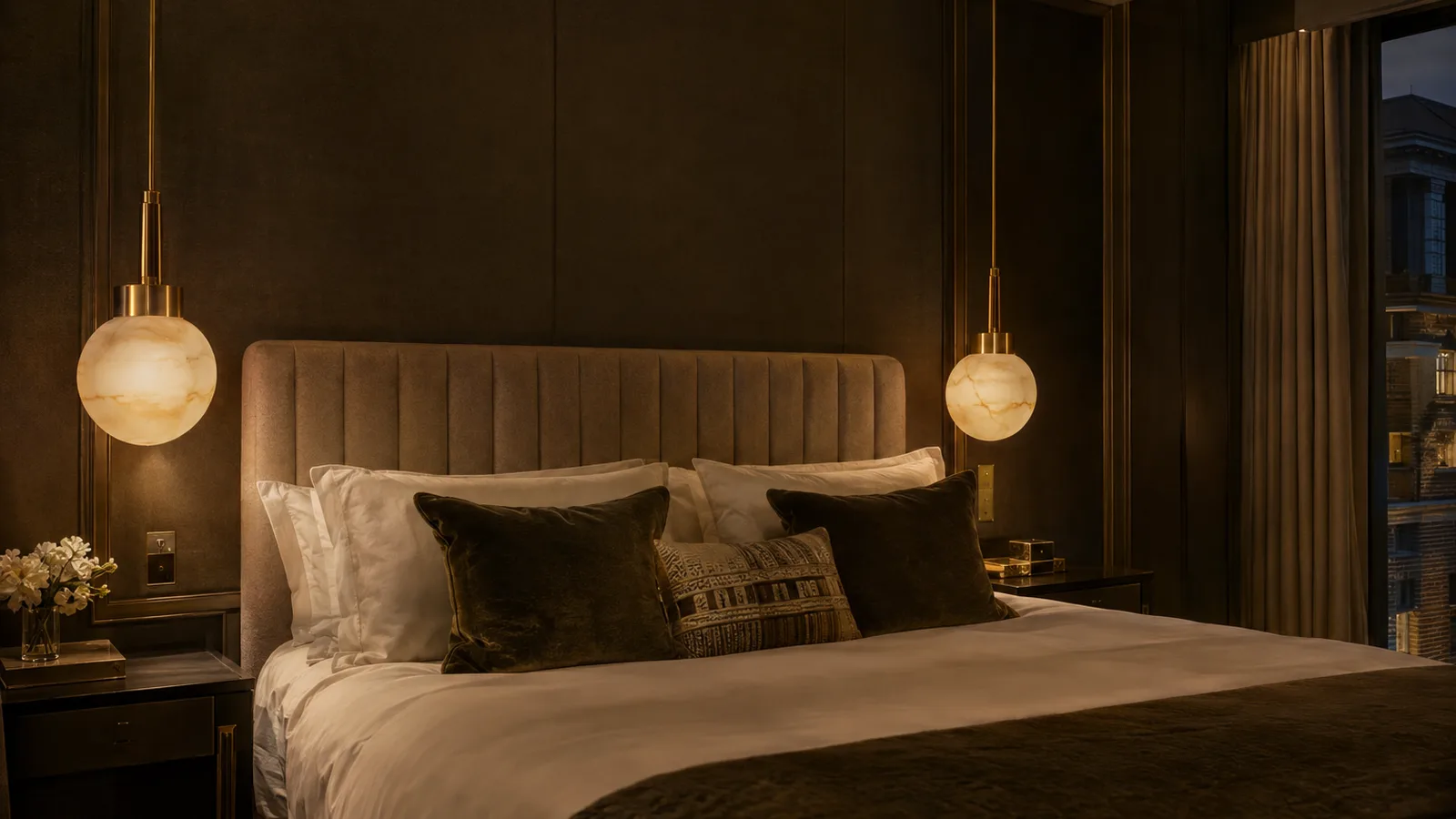
London has seen a run of hotel bedroom projects this month. The Webster opened its first hotel in Covent Garden, with 167 guestrooms including three suites. They were designed by the London studio Red Deer, and Hospitality Net describes the rooms as featuring "bespoke brass and alabaster lighting" (Hospitality Net). Meanwhile, Axiom Hospitality launched Guild Hotels after investing more than £20 million in refurbishing all 186 bedrooms at Guild Hotel Bloomsbury and 330 bedrooms and suites at Guild Hotel Fitzrovia (Hospitality Interiors).
In bedrooms, pendants can do jobs that downlights and table lamps cannot. This guide covers where to use them and how to detail them so they survive years of guests and housekeeping.
Where pendants work in a bedroom
| Position | What the pendant does | Points to check |
|---|---|---|
| Each side of the bed | Replaces table lamps and frees up the bedside table | Drop height, local switching, a shade that hides the lamp |
| Over a desk | Gives task light for working | Glare on screens, and enough light on the worktop |
| Lounge or reading chair | Adds a focal point and reading light | Keep it clear of where people walk |
| Suite living area | Defines a seating or dining zone | Coordinate with the furniture layout |
| Entrance lobby | Sets the first impression on entering the room | Headroom and door swings |
For general hospitality schemes, see suspended lighting for restaurants, bars and hotels.
Getting the bedside drop right
Bedside pendants have to work for reading in bed and look right from the doorway. Mock up the drop on site with the actual bed and headboard before you fix the cable length. Our pendant height guide explains how to approach drops over furniture.
- Hang the shade to one side of the pillow so it does not get in the way when guests sit up
- Choose a shade that hides the lamp from someone lying down
- Allow enough clearance from headboards and wall panelling
- Fix the drop length so housekeeping cannot knock it out of place
Switching and controls
Guests should be able to control each bedside pendant without getting out of bed. Agree the switching early with the electrical designer and the joinery maker, as switches are often built into headboards.
- Separate switches for each side of the bed
- Dimming, where the pendant and lamp are compatible
- A master switch, or a key-card system, near the door
- Simple scenes where a room control system is used
See controls for suspended lighting for more detail.
Fixings, ceilings and weight
Bedroom ceilings are often plasterboard on metal frame or timber. Pendants need a fixing that suits the weight of the fitting, with the load taken back to the structure where needed. Choose canopies that cover the ceiling hole neatly and suit the room's finishes. The guide to suspension kits, cables and canopies covers the options.
Choosing the look
Bedroom pendants are seen up close, so materials matter. Glass, metal, fabric and stone-effect shades all suit different interiors. Our guides to sculptural pendants, pendant finishes and colour temperature for pendants can help. For decorative fittings, browse decorative pendants and wall lights on decorativelighting.shop.
Maintenance and replacement
Hotel rooms are refurbished on a cycle, and fittings take knocks between refurbishments. To keep maintenance simple:
- Use the same lamp type across rooms where you can
- Keep spare shades and canopies on site
- Choose fittings that housekeeping can clean easily
- Record drop lengths so replacements match
Pendants with other lighting
Pendants rarely light a bedroom alone. Recessed downlights often light the entrance and bathroom: see downlights for hotel bedrooms and bathrooms. For plaster-in details, see trimless lighting for hotels. In corridors, linear-led.com covers corridor and wayfinding lighting.
Planning across room types
Hotels usually have several room types, and the lighting needs to work in each one. Plan pendants room type by room type, rather than for one typical room:
| Room type | Points to check |
|---|---|
| Standard double or twin | Bed positions, headboard width and space beside the bed |
| Accessible rooms | Switch positions within reach of the bed and suitable controls |
| Suites | Separate scenes for the bedroom and the living area |
| Rooms with sloping or low ceilings | Shorter drops, or wall lights instead of pendants |
A mock-up room is the best way to test drop heights, switching and the look of the fittings before the full order. It also gives the operator and the housekeeping team a chance to comment on cleaning and maintenance. Record what is agreed in the mock-up, including drop lengths, lamp types and switch positions, so every room is built the same way.
How 299 Lighting can help
299 Lighting can design and supply bespoke pendants for hotel bedrooms and suites, and provides project support through mock-ups and delivery. Talk to the team about your hotel project.
Further reading at 299 Lighting
Next steps on suspendedlighting.com
Planning a suspended scheme?
Send us your layout and ceiling heights. We'll come back with a shortlist, suspension details and LG7 calculations.
Start a project →Frequently asked questions
Can pendants replace bedside table lamps in hotels?
Yes. Bedside pendants free up the bedside table. Plan local switching and a shade that hides the lamp from someone lying in bed.
How high should a bedside pendant hang?
There is no fixed height. Mock it up on site with the bed and headboard, so it works for reading and does not get in the way when guests sit up.
How many rooms does The Webster Covent Garden have?
167 guestrooms, including three suites, according to Hospitality Net.
How should bedroom pendants be switched?
Give each side of the bed its own switch, add dimming where the fitting allows, and provide a master switch near the door.