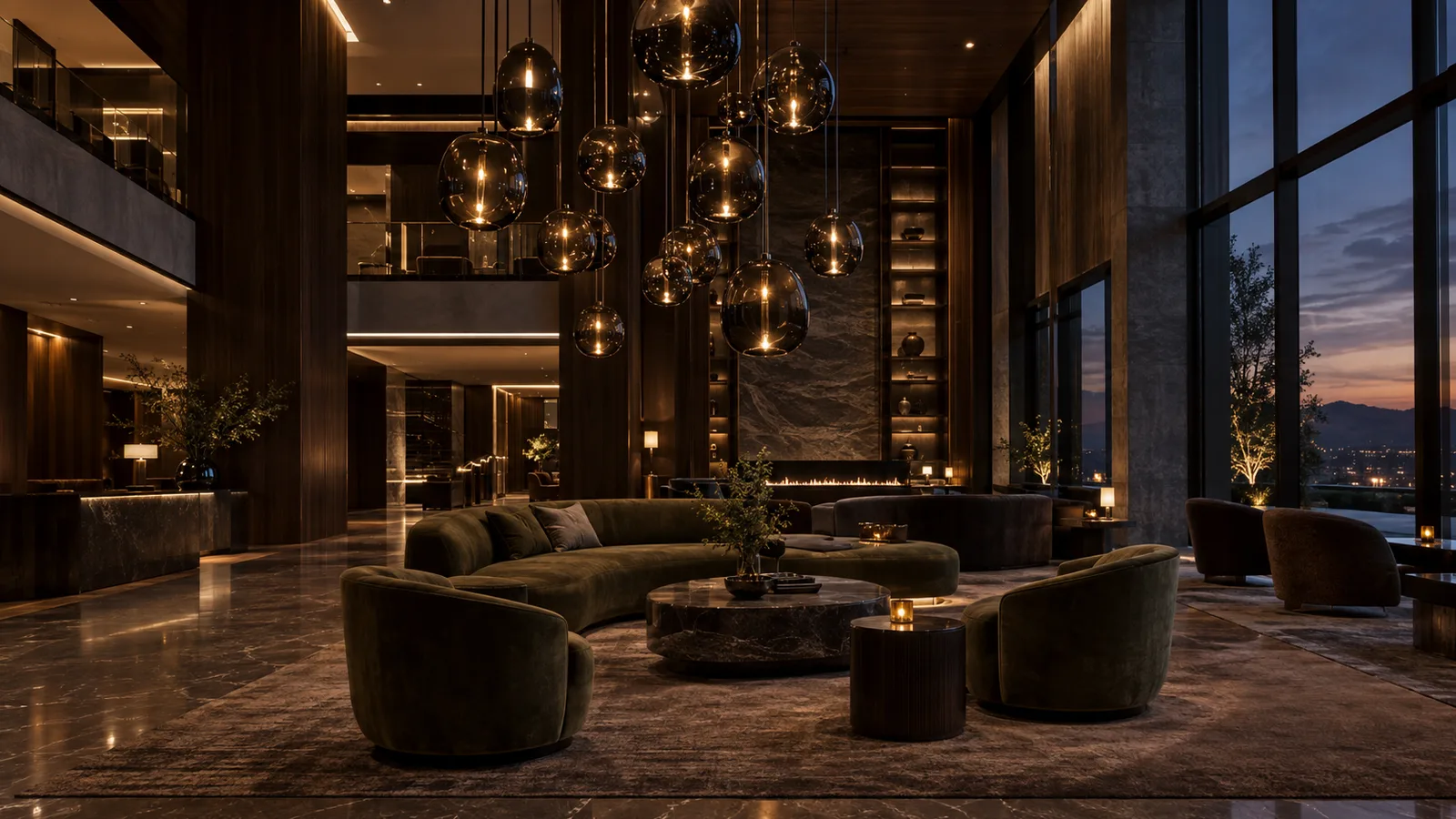
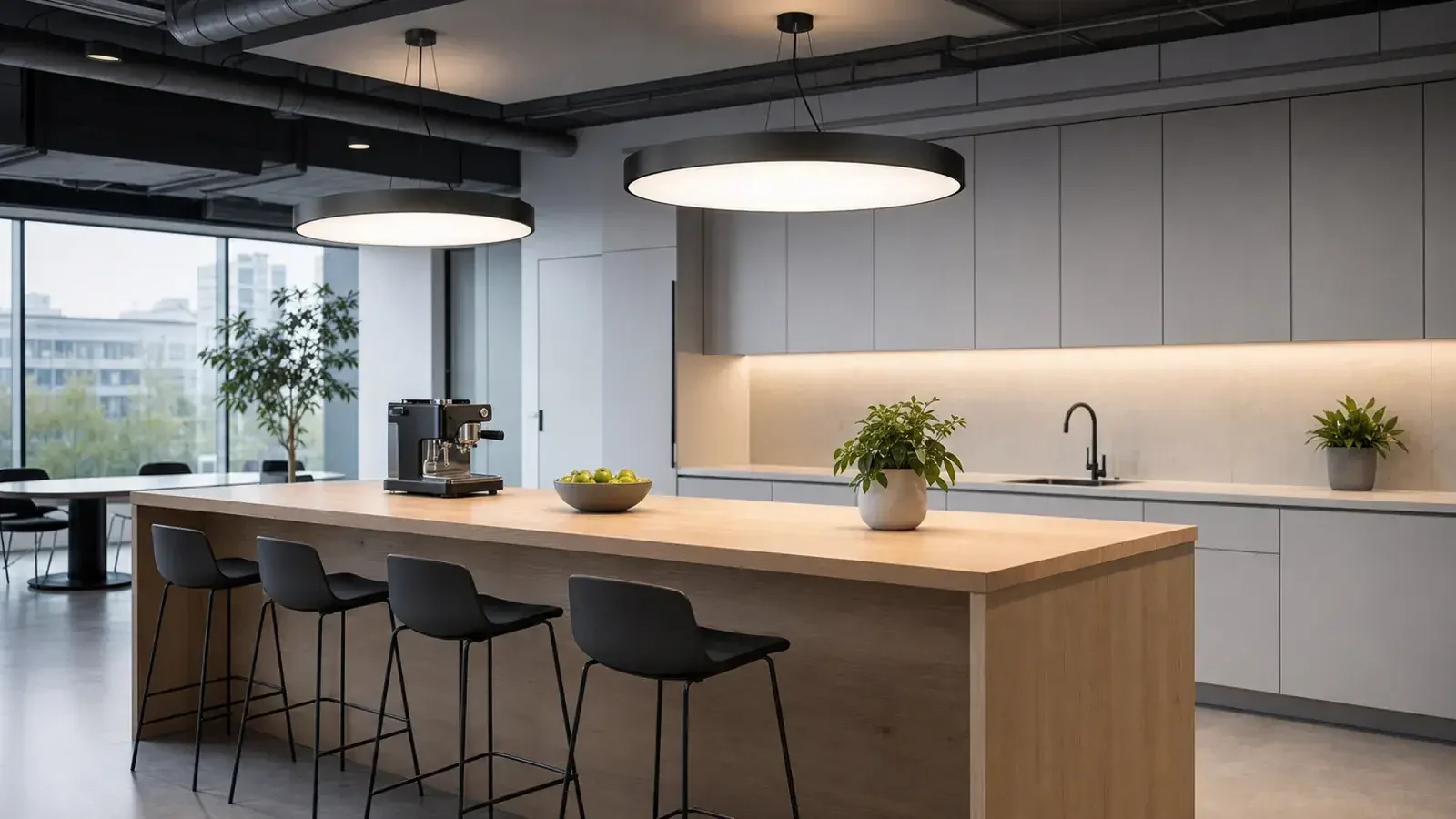
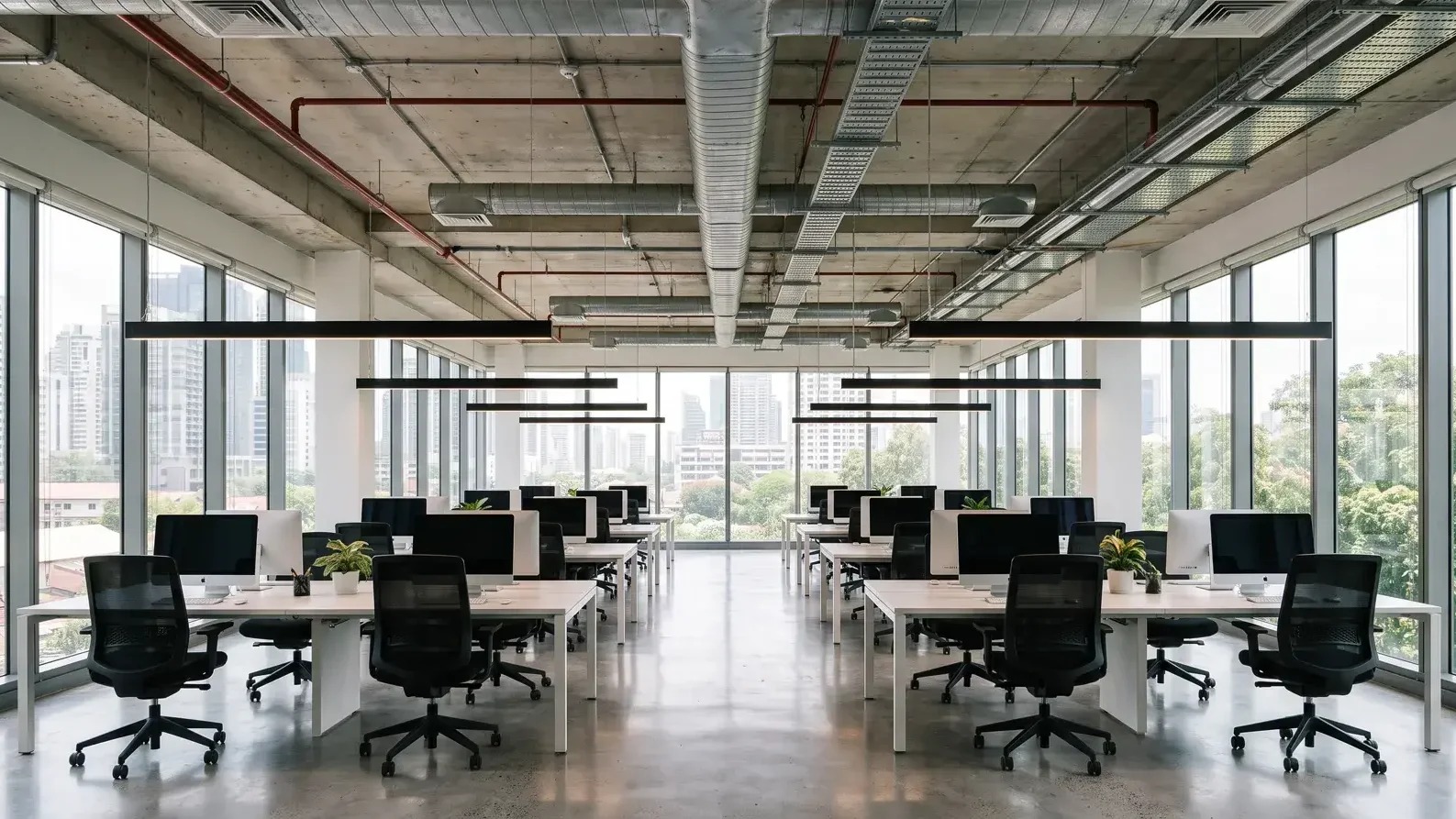
In short
How to choose pendants for nature-led hotels, restaurants and workplaces: natural materials, warm diffused light, layout and practical checks.
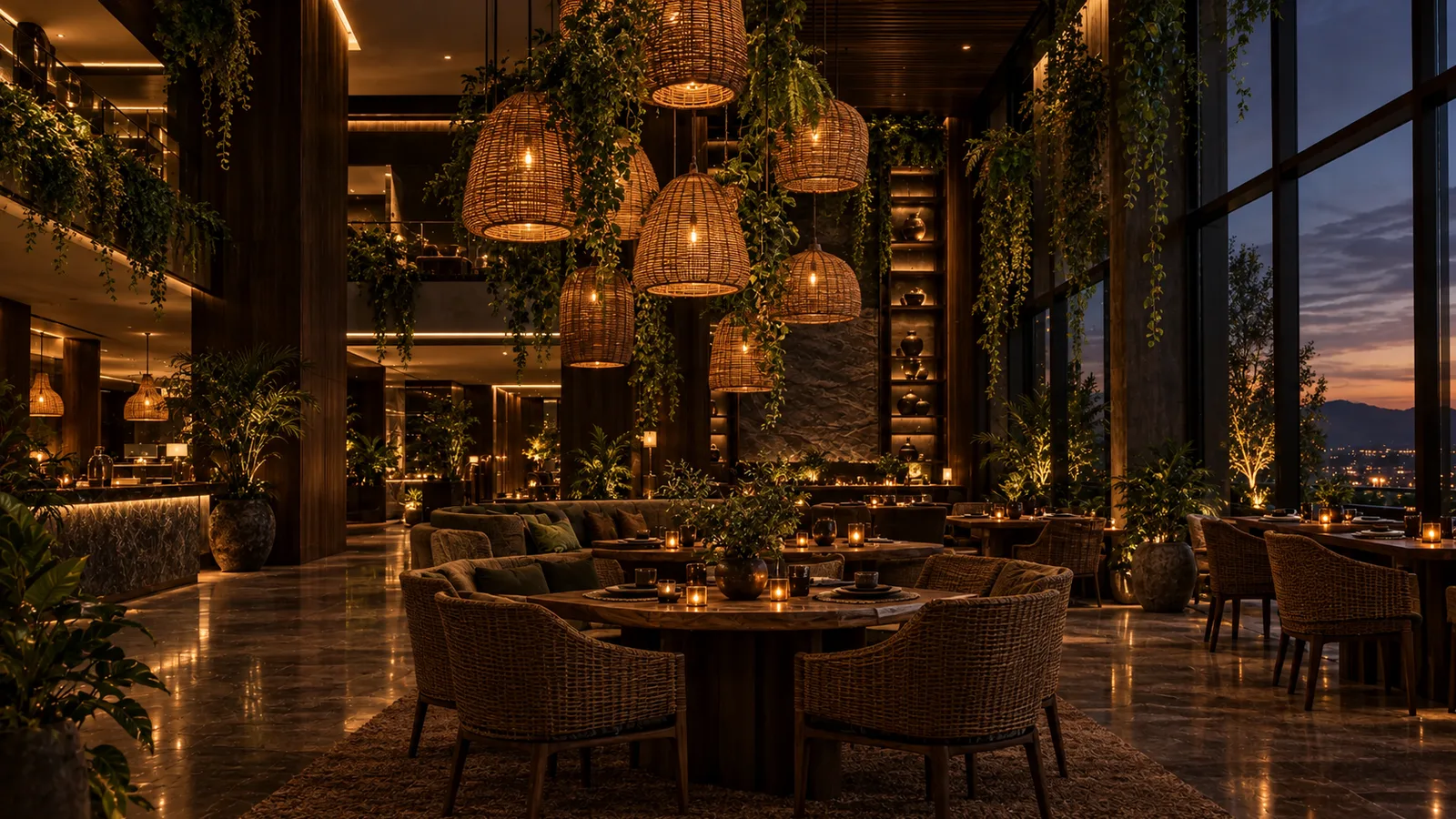
Natural materials are a clear theme at this year's Decorex, which runs at Olympia, London, from 11 to 14 October (Decorex). Soho Lighting, for example, built its Decorex 26 stand around natural materials, understated forms and contemporary craftsmanship (Soho Lighting). In hospitality, the same thinking is well established: 1 Hotel Mayfair, which opened in London on 13 July 2023, has more than 1,300 plants and over 200 plant species across the property (The Caterer).
For designers, that raises a practical question: what does biophilic lighting look like when it hangs from the ceiling? This guide covers how to choose and lay out suspended lighting for nature-led restaurants, bars, hotels and workplaces.
What biophilic lighting means
Biophilic design links people to nature through materials, light, views, plants and natural patterns. Lighting supports it in three ways:
- Material: shades and bodies that look and feel natural, such as timber, rattan, linen, paper, stone or textured glass
- Light quality: warm, soft, diffused light that recalls daylight at the end of the day, rather than bright, cool, even light
- Pattern and variation: pools of light and shade instead of a flat, uniform ceiling
Choosing pendant materials
| Material | Character | Practical notes |
|---|---|---|
| Timber veneer | Warm, crafted | Check fire performance and finish durability |
| Woven rattan or cane | Soft dappled shadows | Dust collects, so plan cleaning access |
| Textile or paper | Very diffuse glow | Keep the LED cool and well spaced from the shade |
| Textured or amber glass | Sparkle and warmth | Heavier, so check ceiling fixings |
| Powder-coated metal in earthy tones | Durable, simple | Pairs well with natural shades nearby |
In larger volumes, a mix often works best: natural feature pendants over tables and bars, with simpler, discreet slim pendants or track carrying the general light.
Light quality
Colour temperature
Most nature-led hospitality schemes sit at 2700K, sometimes lower in bars. Daytime spaces such as all-day cafés and workplace lounges may use 3000K, or tunable white that warms through the evening. Our guide to colour temperature for pendants explains the options.
Colour rendering
Plants, timber and food all look better under high colour rendering. Specify CRI 90 or above for feature pendants. See colour rendering for pendant lighting.
Glare
Open, warm pendants can still glare when they hang low in someone's line of sight. Use diffusing shades, recessed sources or louvres, and check glare with suspended lighting.
Layout and height
Group pendants where people gather, rather than spacing them evenly across the room. Over tables, hang them about 70–85 cm above the top so the light pools on the table and faces. Clusters at different heights can recall a canopy of branches in double-height spaces. Our pendant height guide covers the numbers.
Plants change the plan too. Living walls and planters need light for the plants as well as for people, often from separate track or recessed spots. Coordinate pendants so they do not clash with planting or irrigation.
Practical checks
- Weight and fixing: large natural shades can be heavy. Confirm the ceiling can take the load and the suspension is rated for it
- Cleaning: woven and textile shades need regular dusting. Agree access before installation
- Fire and reaction to heat: check material certificates and keep sources well away from shades
- Controls: dimming is essential for evening atmosphere. See controls for suspended lighting
- Reuse: where existing pendants are kept, a retrofit of feature luminaires can update the light source
Maintenance and lifetime
Natural materials age, and that is part of their appeal. But the light source inside should be easy to maintain. Ask whether the LED module and driver can be replaced without removing the shade, and whether spare shades are available if one is damaged. For busy hospitality venues, where cleaning teams work at night, accessible fittings and robust suspension kits save time and avoid damage. See suspension kits, cables and canopies.
Where to go next
For more ideas, read suspended lighting for restaurants, bars and hotels and sculptural pendants for commercial interiors. For linear runs over bars and counters, see linear lighting for hospitality. For guest bedrooms, downlights for hotel bedrooms. For residential-style decorative pendants, browse decorative pendants.
299 Lighting can develop bespoke pendants in natural finishes. Talk to the team about your scheme.
Further reading at 299 Lighting
Next steps on suspendedlighting.com
Planning a suspended scheme?
Send us your layout and ceiling heights. We'll come back with a shortlist, suspension details and LG7 calculations.
Start a project →Frequently asked questions
What is biophilic lighting?
Lighting that supports a connection to nature, through natural materials, warm and diffused light, and patterns of light and shade rather than flat, uniform lighting.
What colour temperature suits biophilic hospitality design?
Usually 2700K for evening spaces and bars, and 3000K or tunable white for daytime spaces such as cafés and workplace lounges.
Are rattan and textile pendants suitable for commercial projects?
Yes, with checks on fire performance, weight, cleaning access and keeping the light source well away from the shade.
Do pendants provide enough light for plants?
Usually not. Living walls and planters normally need separate horticultural or accent lighting, coordinated with the pendants.