In short
What London Design Festival 2026 showed about sculptural pendants, and how to specify clusters, chandeliers and glass pendants safely in workplaces and hotels.
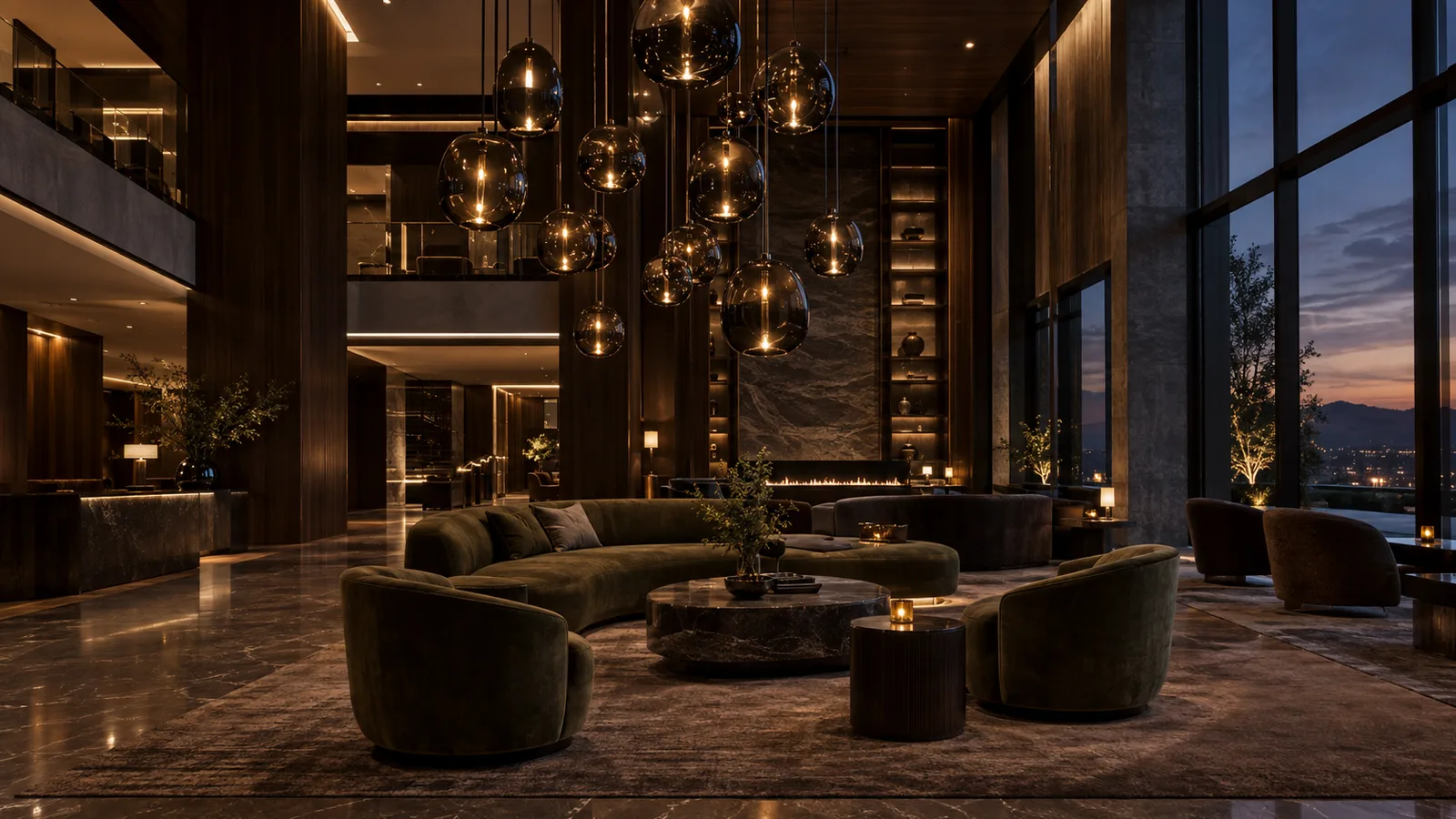
London Design Festival 2026 was, in Wallpaper's words, "an ode to the portable light", but the pieces that drew crowds were often suspended. Lee Broom's The Chant Chambers, shown on Rivington Street from 15 to 20 September, took his Chant light into oversized chandelier compositions, linear pendants and architectural lighting structures in a new smoked-glass finish, while Bocci showed a purple version of its 14p glass light with Bethan Laura Wood (Wallpaper).
Pieces like these increasingly find their way from galleries into receptions, members' clubs, restaurants and workplace hubs. They look effortless in a showroom. In a commercial building, a sculptural pendant has to meet the same rules on fixings, glare, maintenance and emergency lighting as any other luminaire. This guide covers what to check before a statement piece goes on the drawing.
Decide what the pendant is for
A sculptural pendant is usually a focal point, not the main source of light. Be clear early about which job it does, because it changes the specification.
- Focal or decorative: low output, warm, dimmable, judged on how it looks lit and unlit.
- Task over tables: needs enough light on the table without glare for people sitting around it.
- Wayfinding: marks an entrance, bar or stair, and is often visible from outside.
Where the space also needs general light, combine the feature with discreet recessed lighting or linear systems, so the sculpture does not have to light the whole room.
Clusters, chandeliers and single statements
| Format | Works well in | Watch out for |
|---|---|---|
| Cluster of small pendants | Double-height receptions, stairwells, bars | Many cables and canopies; plan a single large canopy or a ceiling plate |
| Large chandelier or composition | Hotel lobbies, ballrooms, atria | Weight, fixing loads and access for cleaning |
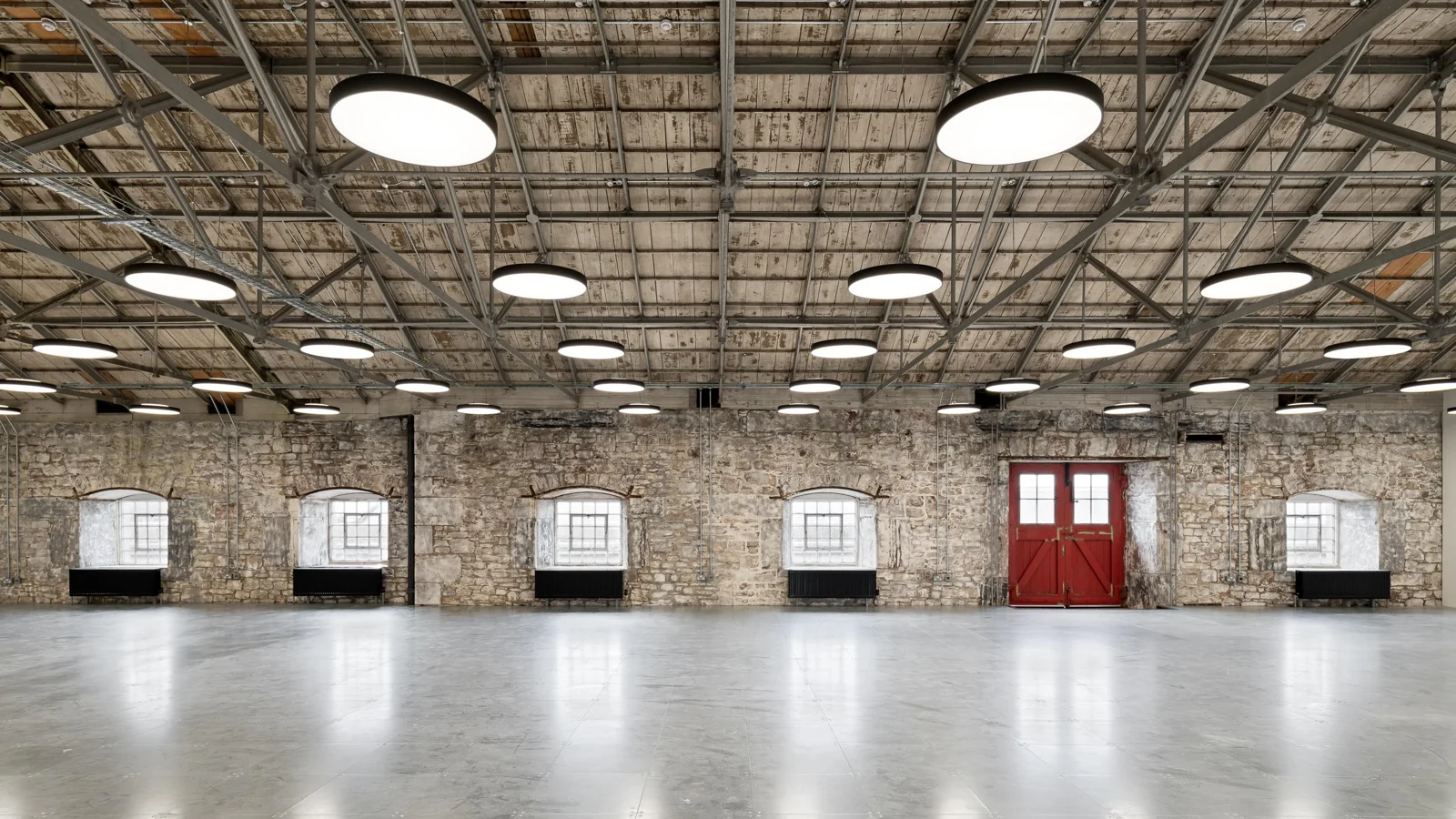
| Ring or oval | Meeting rooms, breakout tables, lounges | Diameter relative to the table or seating group |
| Long linear sculpture | Restaurants, boardrooms, long tables | Suspension points and levelling along the length |
For rings and ovals, see our guides to circular pendant lighting and curved suspended lighting.
Weight, fixings and the ceiling
Glass is heavy. A composition of many glass elements can weigh far more than a typical office pendant, so confirm the weight from the manufacturer and get the structural engineer or ceiling installer to approve the fixing. Suspended ceiling grids are not designed to carry decorative loads, so feature pendants usually need independent fixings to the slab or a secondary steel frame.
- Ask for the total weight, including canopy and cables.
- Confirm the fixing method for the ceiling type: concrete, timber joists, steel or grid.
- Allow for seismic or anti-tamper restraint where the client or insurer requires it.
- Check the cable and canopy finish so they read as part of the design.
Our guide to suspension kits, cables and canopies explains the options, and suspended lighting for high ceilings covers drop lengths in atria.
Glare and clear glass
Clear and smoked glass looks beautiful, but a bright source behind clear glass can dazzle anyone sitting or standing nearby. Smoked, opal or textured glass softens the source. Integrated LED modules designed for the piece usually control glare better than a bare lamp. Mount pieces above the main sightlines where possible, and dim them to suit the room. Our guide to glare and UGR with suspended lighting explains the principles.
Hanging height
Over tables, the bottom of a pendant typically sits around 700 to 900 mm above the tabletop so people can see each other across it. In circulation areas the bottom of the piece must clear head height comfortably, and in double-height spaces it should read from both levels. See how high suspended lighting should hang.
Maintenance and access
Sculptural pieces collect dust, and glass needs cleaning. Before signing off a large chandelier in a lobby, agree how it will be reached: a scaffold tower, a mobile platform or a winch that lowers the piece. If light sources are integrated, ask about the expected life and how a failed module would be replaced.
Controls and emergency lighting
Feature pendants should be on their own dimmable circuit so they can be set separately from the general light. Check that the driver suits the control system, whether that is DALI, Casambi or phase dimming; our controls guide covers the choices. Decorative pieces are rarely suitable for emergency lighting, so the emergency scheme normally sits in other fittings; see emergency lighting in suspended schemes.
When a standard piece will not do
Sometimes the design needs a size, finish or arrangement that no catalogue offers. 299 Lighting makes bespoke lighting and feature lights, and our suspended range includes rings and slim linear pendants that can be grouped. For decorative residential pendants and chandeliers, our sister site decorativelighting.shop stocks the Ideal Lux collection.
Talk to us about a feature pendant, and we will check weights, fixings and controls with you.
Further reading at 299 Lighting
Next steps on suspendedlighting.com
Planning a suspended scheme?
Send us your layout and ceiling heights. We'll come back with a shortlist, suspension details and LG7 calculations.
Start a project →Frequently asked questions
Can a sculptural pendant hang from a suspended ceiling grid?
Usually not. Grids are not designed for decorative loads, so feature pendants are normally fixed independently to the slab or to a secondary frame approved by the engineer.
How do I stop a glass pendant from causing glare?
Choose smoked, opal or textured glass, use LED sources designed for the piece, hang it above the main sightlines and put it on a dimmer.
How high should a pendant hang over a table?
Around 700 to 900 mm above the tabletop is a common starting point, so people can see each other across the table.
Can feature pendants provide emergency lighting?
Rarely. The emergency lighting is normally provided by other fittings or self-contained units designed and tested for the purpose.