In short
A checklist for specifying decorative pendants in commercial interiors, ahead of LiGHT 26 at the Business Design Centre on 18 and 19 November.
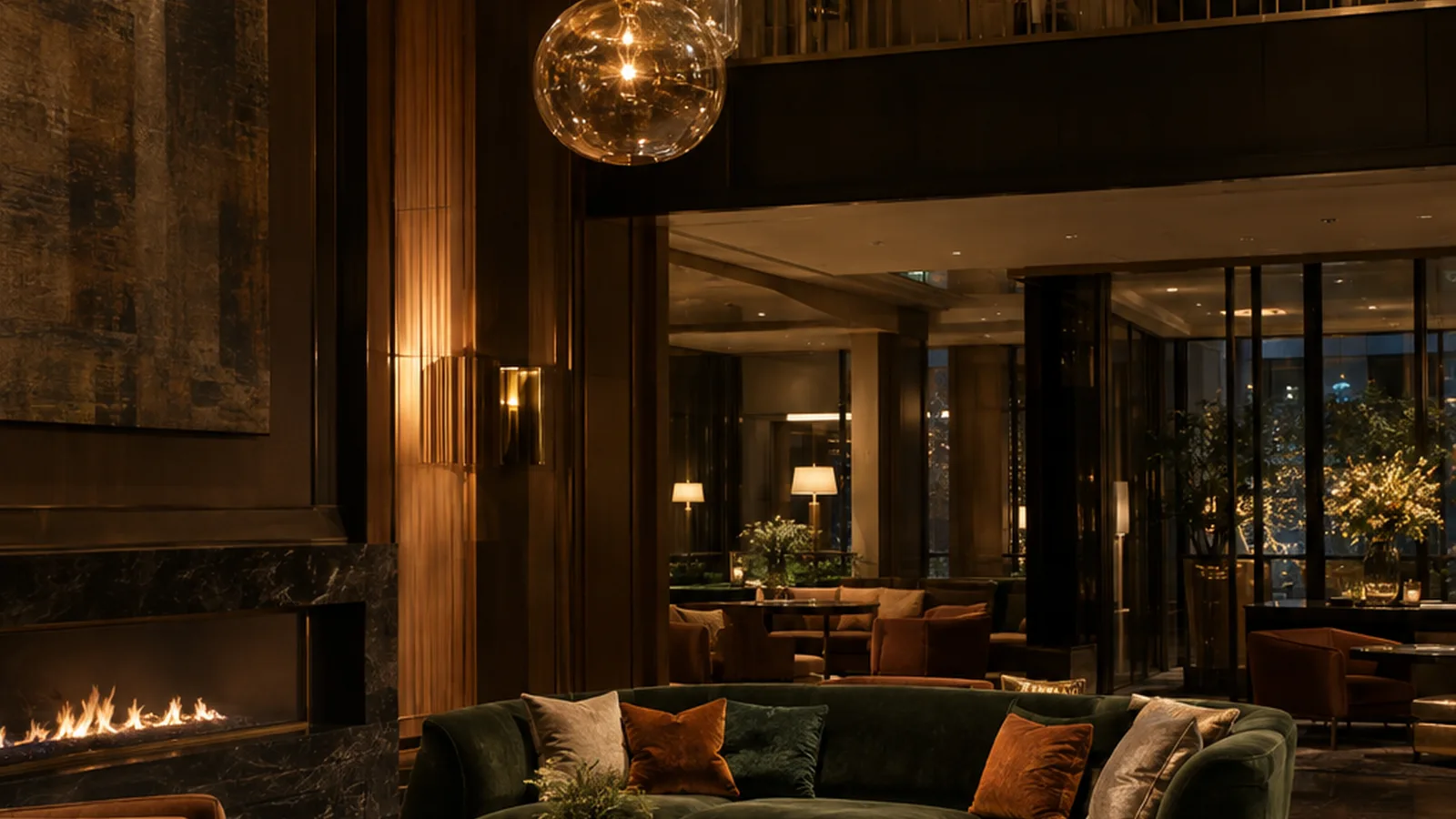
LiGHT 26 returns to the Business Design Centre in Islington on 18 and 19 November 2026. Organiser Messe Frankfurt says more than 200 brands will exhibit across three zones, Architectural, Decorative and Technical, and that the Decorative Zone is aimed at interior designers working on hospitality and commercial projects (Hospitality Interiors). The SLL is supporting the show (CIBSE).
Trade shows are where decorative pendants catch the eye. The hard part comes later, when a fitting chosen for how it looks has to work in a real ceiling, meet a budget and last for years. This checklist covers the questions to ask before a decorative pendant goes into a commercial specification.
Decorative and architectural pendants
| Decorative pendant | Architectural pendant | |
|---|---|---|
| Main job | Character, focal point, brand | Task and general lighting |
| Light output | Often low, with glare from exposed lamps | Planned for lux levels and UGR |
| Typical use | Receptions, bars, restaurants, lounges | Offices, meeting rooms, classrooms |
| Data to ask for | Weight, lamp type, finish, IP, dimming | Photometry, UGR, efficacy, controls |
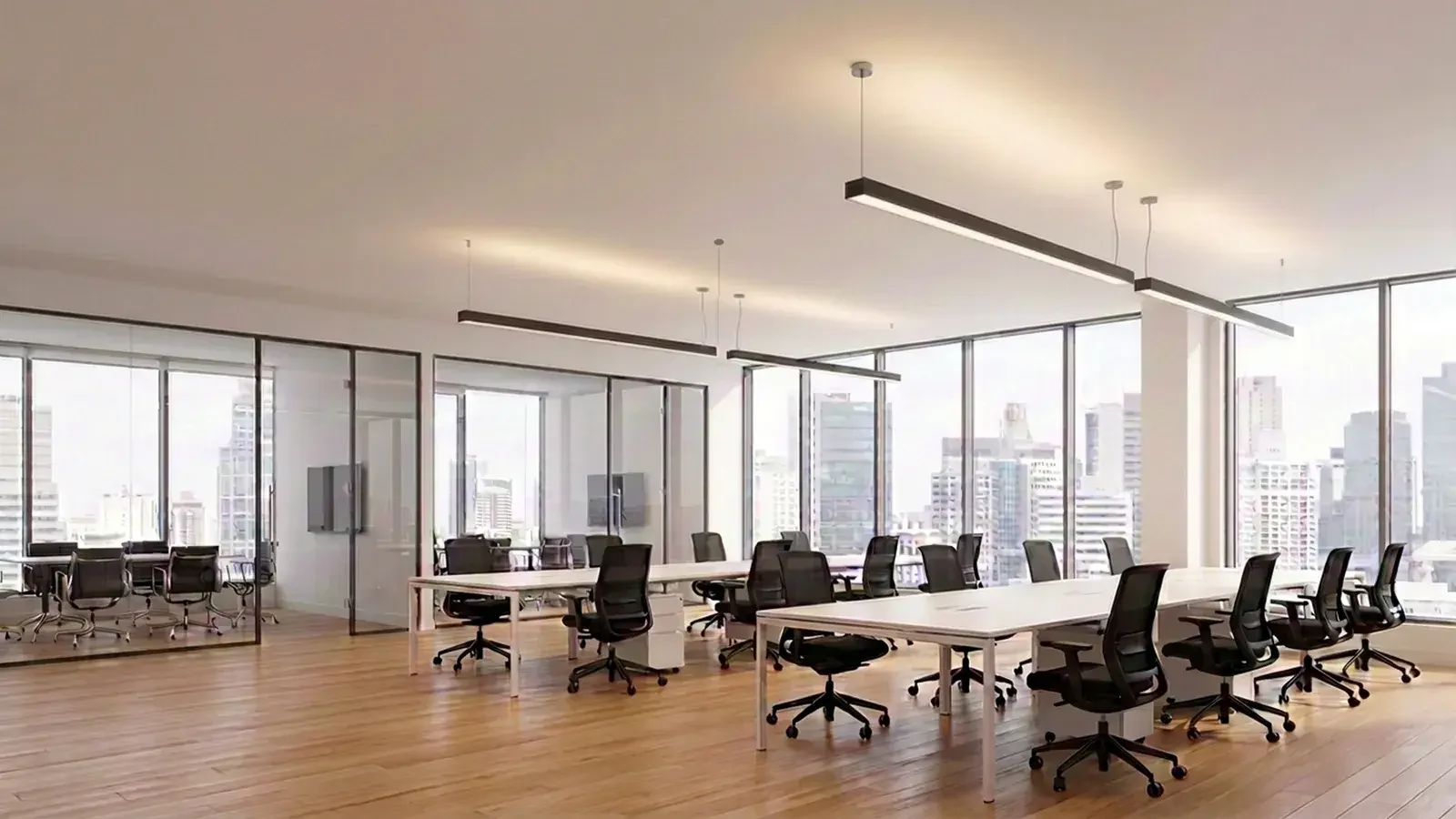
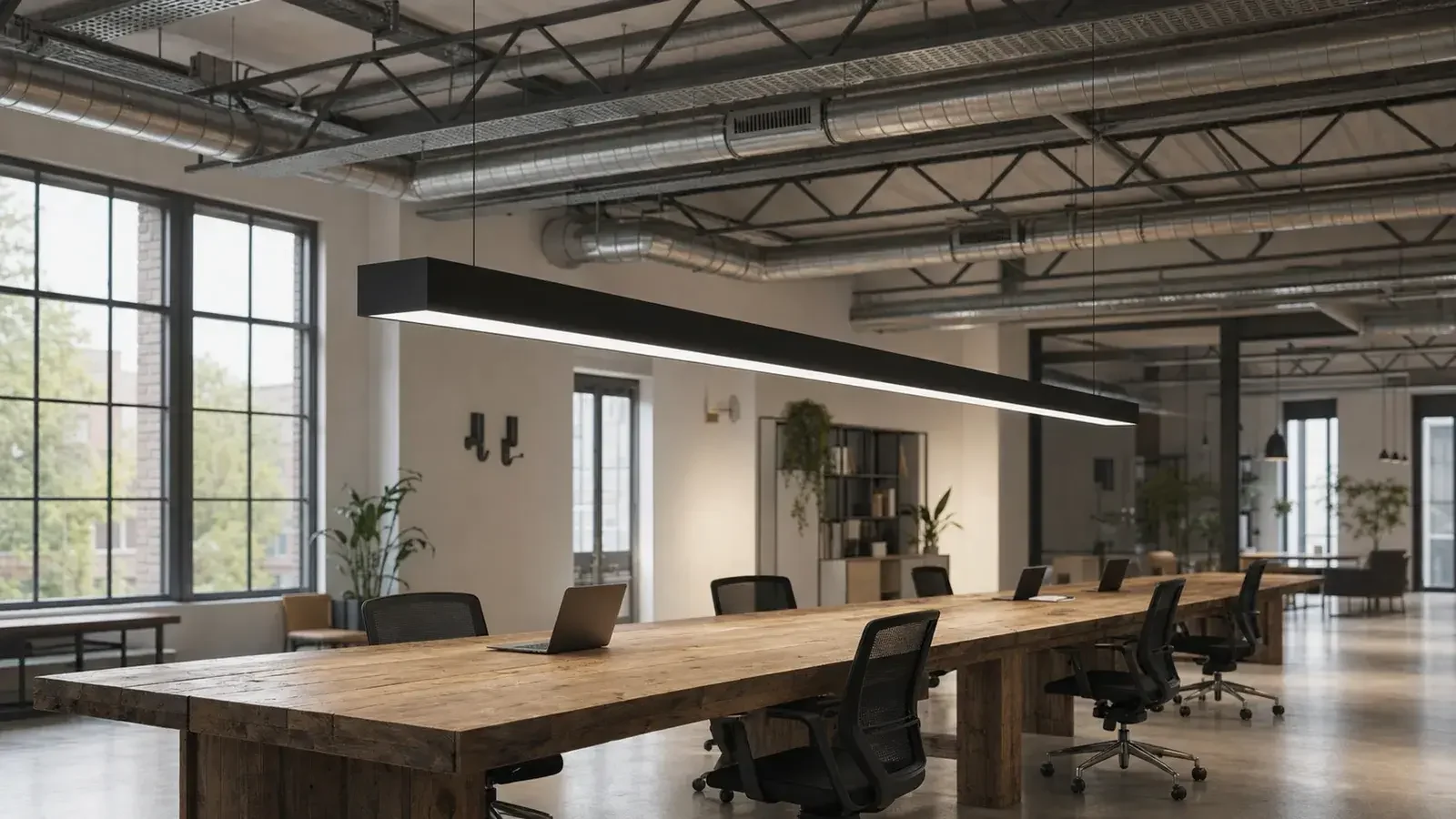
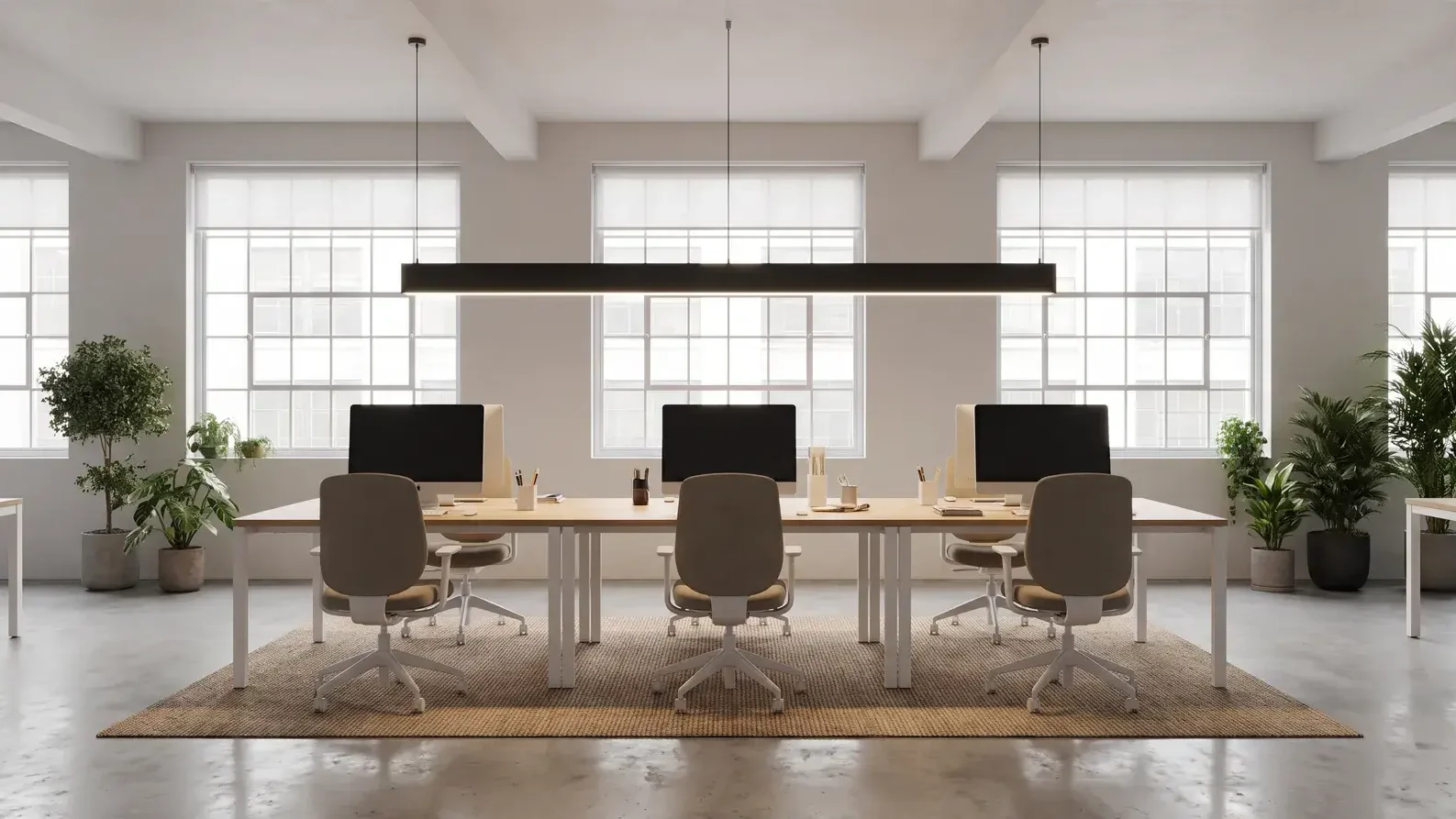
Most good commercial interiors use both. A feature pendant in a reception sets the mood, while suspended linear in the office does the work.
The specification checklist
Light and glare
- What does it do to the room? Ask for a photometric file, or at least the lumen output.
- Will people see the lamp? Exposed lamps and clear glass can glare at eye level. See glare and UGR for pendants.
- Colour temperature and CRI. Match these across decorative and architectural fittings. See colour temperature and CRI for pendants.
Ceiling and fixing
- Weight. Large glass or metal pendants may need a fixing into the slab, not the ceiling grid.
- Suspension. Check cable length, adjustability and canopy size. See suspension kits, cables and canopies.
- Drop height. Agree heights over tables, bars and walkways. See suspended lighting height and pendant spacing and layout.
Lamps, drivers and dimming
- Integrated LED or replaceable lamp? Replaceable lamps are easy to swap. Integrated LED needs a replaceable driver and module for long life.
- Dimming. Confirm the dimming protocol and that the lamp or driver supports it. Hospitality schemes almost always dim.
- Controls. See controls for suspended lighting.
Compliance and practical points
- UKCA or CE marking and the right documentation.
- IP rating for kitchens, bathrooms or covered terraces.
- Cleaning and maintenance. Who will clean a 2-metre chandelier above a stair?
- Lead time and spares. Ask how long finishes and parts will be available.
Scale in commercial spaces
Commercial rooms are larger than they look on a mood board. A pendant that looks generous in a stand at a show can disappear in a double-height reception. Draw it to scale on the section, and consider clusters or sculptural pendants for large volumes. For tall spaces, read suspended lighting for high ceilings.
Before and after the show
- Bring plans and sections so exhibitors can comment on scale and fixing
- Ask for data sheets, weights and photometric files, not just brochures
- Note lead times and minimum order quantities
- Ask about bespoke sizes and finishes for repeat fittings across a project
- Check that the supplier can support the job through installation
Matching decorative and architectural lighting
The most common problem in a commercial scheme is not a bad pendant, but a mismatch. A warm decorative pendant next to cool downlights looks wrong, and a bright feature fitting next to dim ambient light creates glare. Treat the decorative pendants as part of the whole lighting design:
- Use the same colour temperature for decorative and architectural fittings in each zone
- Keep the CRI consistent, so materials and finishes look the same under both
- Put decorative and architectural lighting on separate dimming channels, so you can balance them
- Check that the decorative pendants do not sit in sightlines for screens or presentations
In a restaurant or bar, the decorative pendants might be the main visible light, with downlights or track picking out tables and artwork. In an office, they are more likely to mark a reception, breakout area or meeting room. Our guides to suspended lighting for hospitality, meeting rooms and retail cover the details for each sector.
Sustainability questions
Clients increasingly ask about the environmental impact of fittings, and decorative pendants are no exception. Ask manufacturers whether parts can be replaced, whether an EPD or embodied carbon figure is available, and how long spares will be supported. A pendant that can be repaired will last longer than one that has to be thrown away when the driver fails. For refurbishments, read suspended lighting in refurbishments.
Budget and value
Decorative pendants vary widely in price. To keep the look within budget, use statement fittings where people will see them most, such as the entrance, bar or reception, and simpler pendants elsewhere. Our guide to suspended lighting costs explains what drives price.
How 299 Lighting can help
299 Lighting supplies decorative and architectural suspended lighting and feature lights for commercial interiors, and can produce bespoke pendants. We can check weights, fixings and photometry and coordinate the whole scheme through our project support. Send us your drawings to start. For suspended linear options, see linear-led.com on suspended linear height and spacing, and for decorative pendants for homes, browse pendants on decorativelighting.shop.
Further reading at 299 Lighting
Next steps on suspendedlighting.com
Planning a suspended scheme?
Send us your layout and ceiling heights. We'll come back with a shortlist, suspension details and LG7 calculations.
Start a project →Frequently asked questions
When is LiGHT 26?
18 and 19 November 2026, at the Business Design Centre in Islington, London.
What is the difference between decorative and architectural pendants?
Decorative pendants add character and focal points. Architectural pendants are planned for lighting levels, glare control and efficiency.
What should I check before specifying a decorative pendant?
Weight and fixing, drop height, lumen output and glare, colour temperature, dimming compatibility, IP rating, maintenance and lead time.
Can decorative pendants light a whole room?
Usually not on their own. Most commercial schemes combine decorative pendants with architectural lighting.